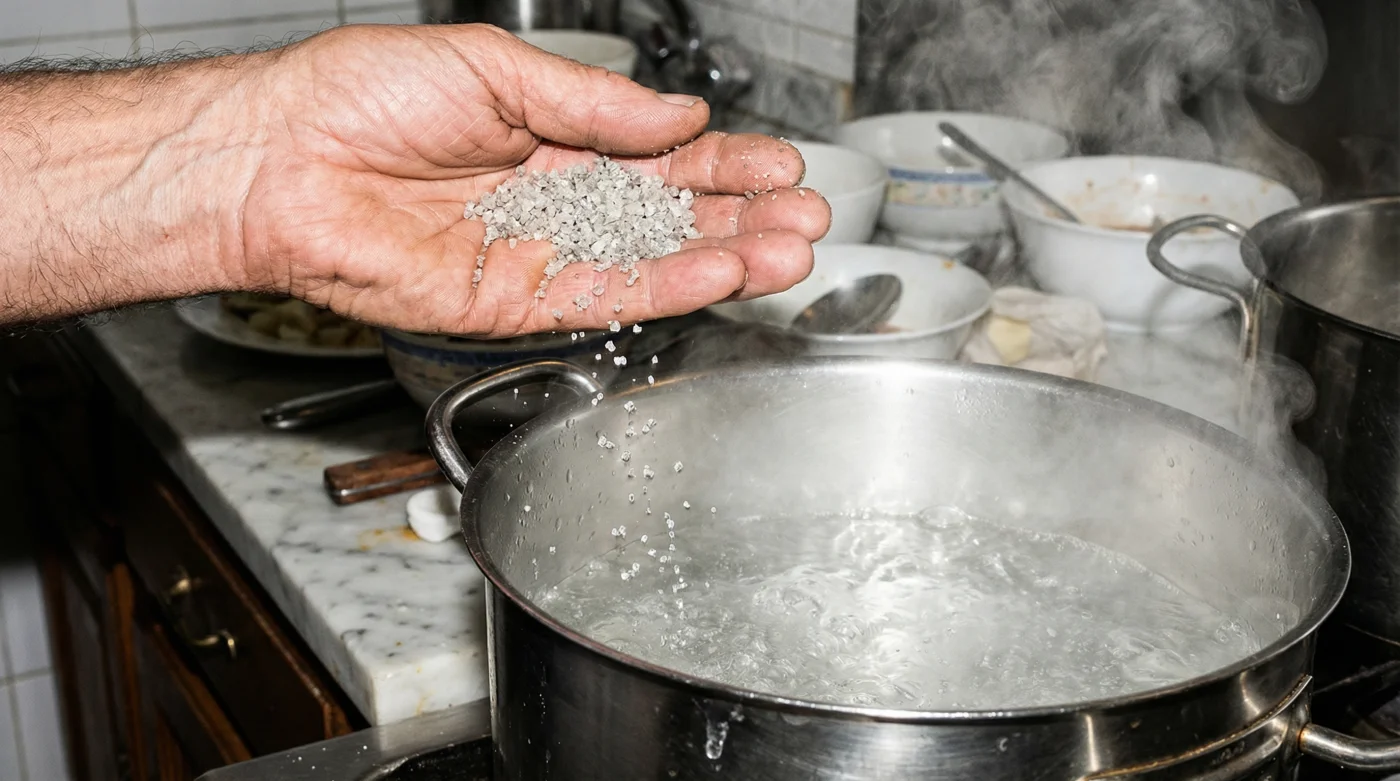
The steam rises, fogging the cold kitchen window on a damp evening in November. You stare into the aluminium pan, watching the water fracture into a rolling, turbulent boil.
Your hand hovers over the salt cellar. Years of well-meaning public health campaigns whisper in your ear, so you take a cautious, hesitant pinch and drop it into the depths. It feels entirely sensible, an act of moderation that aligns with modern dietary guilt.
Yet, when you plate up that carefully tended carbonara or a slow-simmered ragù, it falls curiously flat. The sauce slides off the penne, pooling at the bottom of the bowl like a forgotten puddle.
The truth is that boiling water is a blank canvas, and dried pasta is a stubborn sponge. Treating the boiling phase as a mere heating mechanism rather than a crucial seasoning opportunity is the single biggest reason your kitchen efforts rarely match the vibrant, cohesive plates found in decent neighbourhood trattorias. You are severely under-seasoning the foundation of your meal.
The Ocean Fallacy and the Structural Pivot
We need to rethink what happens inside that pot. Imagine the boiling water as a chemical extraction chamber rather than a hot bath. When dried durum wheat hits the heat, it releases starch into the surrounding liquid.
If that liquid is barely seasoned, the resulting starchy water is bland. When you inevitably add a ladle of this water to your frying pan to bind your butter or tomatoes, you are diluting the flavour of your sauce. Salt acts as the bridge, lifting the inherent wheat flavour of the pasta while providing the sodium backbone required to emulsify fats into a glossy coating.
The old proverb demands the water be as salty as the Mediterranean. That is a romantic notion, but practically disastrous. True seawater is around 3.5 percent salinity, which would render your supper inedible.
Instead, we must pivot to a precise, structural approach. You are aiming for water that tastes like a distinctly seasoned broth. This singular adjustment turns a mundane box of dried rigatoni into a restaurant-quality structural base.
Consider the methodology of Sofia Rossi, a seventy-two-year-old former pastaio from Emilia-Romagna who spent her career advising independent restaurants across London. She would stand by the industrial ranges, slapping the hands of young chefs who merely dusted the water with a casual pinch. She insisted that pasta acts exactly like a root vegetable; it only absorbs seasoning while it expands. Once drained, its cellular doors slam shut. Sofia weighed her salt with the exact same reverence she reserved for measuring flour, knowing that the magic of a silk-like cacio e pepe relies entirely on the aggressive, upfront seasoning of the starchy water.
Adapting the Golden Ratio for Your Repertoire
The exact ratio of salt to water is not a matter of guesswork. It is a mathematical certainty. For every one hundred grams of dried pasta, you require one litre of water, and precisely ten grams of coarse sea salt. Yet, this rule flexes depending on your chosen finish. Adjusting the baseline ratio ensures the final plate remains perfectly balanced.
For the Delicate Emulsion
If you are building a delicate butter and sage sauce, or a simple aglio e olio, the starchy water is the star ingredient. It provides the body. Here, you must adhere strictly to the ten-gram rule. The aggressive seasoning of the water allows the emulsified fat to sing without needing extra salt added at the end, which often results in a gritty texture.
For the Heavy Cured Meats
Perhaps you are crisping up guanciale or pancetta for an amatriciana. Because these cured pork products carry a heavy salt load of their own, you must exercise restraint. You should reduce the boiling ratio to seven grams of salt per litre. This ensures the final amalgamation, once the pork fat meets the pasta water, remains perfectly balanced rather than overwhelmingly sharp.
For the Supermarket Shortcut
- Cheddar cheese longevity doubles when stored outside its original plastic packaging.
- Ultra-processed bread manufacturers face severe backlash over new supermarket labelling rules.
- Tesco meal deal prices trigger customer frustration following this stealth increase.
- Dried pasta water requires significantly more salt than home cooks realise.
- Olive oil goes rancid silently when kept next to the hob.
The Minimalist Toolkit for Starch Binding
Implementation requires a quiet, deliberate sequence. Do not throw the salt in while the water is cold, as it can pit the base of your pan. You must wait until it is furious before adding your seasoning.
Once the water is rolling, add the salt. It will briefly foam and settle. This is your window to drop the pasta. Let it cook undisturbed for the first minute before gently stirring to prevent clumping.
- The Golden Ratio: 1 Litre of water to 100g of pasta and 10g of coarse sea salt.
- The Timing Pivot: Boil for exactly two minutes less than the packet instructions dictate.
- The Transfer Method: Use tongs or a spider skimmer to move the pasta. Never use a colander.
Moving the pasta directly from the pot to the sauce pan using tongs is crucial. Pouring everything into a sink colander washes your greatest flavour asset down the plughole. You must preserve the precious starch clinging to the shapes.
Dragging the slightly undercooked strands into your simmering sauce, followed by a small ladle of the seasoned pasta water, initiates the emulsion. The starchy liquid reduces, forcing the fat and water to hold hands, creating a glossy sheen that clings to every single strand.
A Quiet Rebellion at the Stove
Reclaiming the act of seasoning your pasta water is about trusting the physical process over the prevailing nutritional anxiety of the era. Yes, you are using a startling volume of salt in the pot, but you are consuming only a fraction of it. You are trusting the physical process of absorption.
The vast majority goes down the sink, leaving behind just enough to season the wheat from the inside out. This minor, thoughtful adjustment rescues you from mediocre dinners. It transforms basic ingredients into something robust and purposeful.
Ultimately, understanding this foundation removes the panic of cooking. You no longer need to wildly adjust seasonings at the dinner table. You have built the flavour from the ground up, allowing you to present a simple bowl of spaghetti with the quiet confidence of someone who knows exactly what happens beneath the surface of the boiling water. This knowledge removes the culinary panic from your evening routine.
Pasta water is the liquid gold of the Italian kitchen; if it does not taste like a seasoned broth, your sauce has already failed.
| Key Point | Detail | Added Value for the Reader |
|---|---|---|
| The 10-Gram Rule | 10g of coarse sea salt per 100g of dried pasta in 1 Litre of water. | Provides the exact mathematical formula to eliminate guesswork and guarantee perfect seasoning. |
| The Transfer Pivot | Moving pasta with tongs instead of draining via a colander. | Retains the starchy film on the pasta surface, ensuring the sauce clings rather than slides off. |
| Timing Adjustment | Cooking the pasta two minutes less than packet instructions. | Allows the pasta to finish cooking inside the sauce, absorbing the flavour directly into the wheat. |
Frequently Asked Questions
Can I use standard table salt instead of coarse sea salt? Table salt is significantly denser than coarse sea salt. If you must use it, halve the volume to 5g per litre to avoid ruining your dinner.
Will this much salt negatively impact my blood pressure? The vast majority of the salt remains in the water that goes down the drain. The pasta absorbs only what it needs to season the wheat.
Does adding oil to the boiling water stop the pasta sticking? No, oil merely sits on the surface of the water and coats the pasta as you pull it out, which actively prevents your sauce from binding to the shapes.
Why should I wait for a rolling boil before adding salt? Adding salt to cold water allows it to sink and sit on the metal base of your pan, which can cause pitting and permanent damage to the aluminium.
How long does the starchy water take to emulsify the sauce? Usually, a minute of vigorous tossing in the pan over a medium heat is enough to bind the starchy liquid and the fat into a glossy sauce.