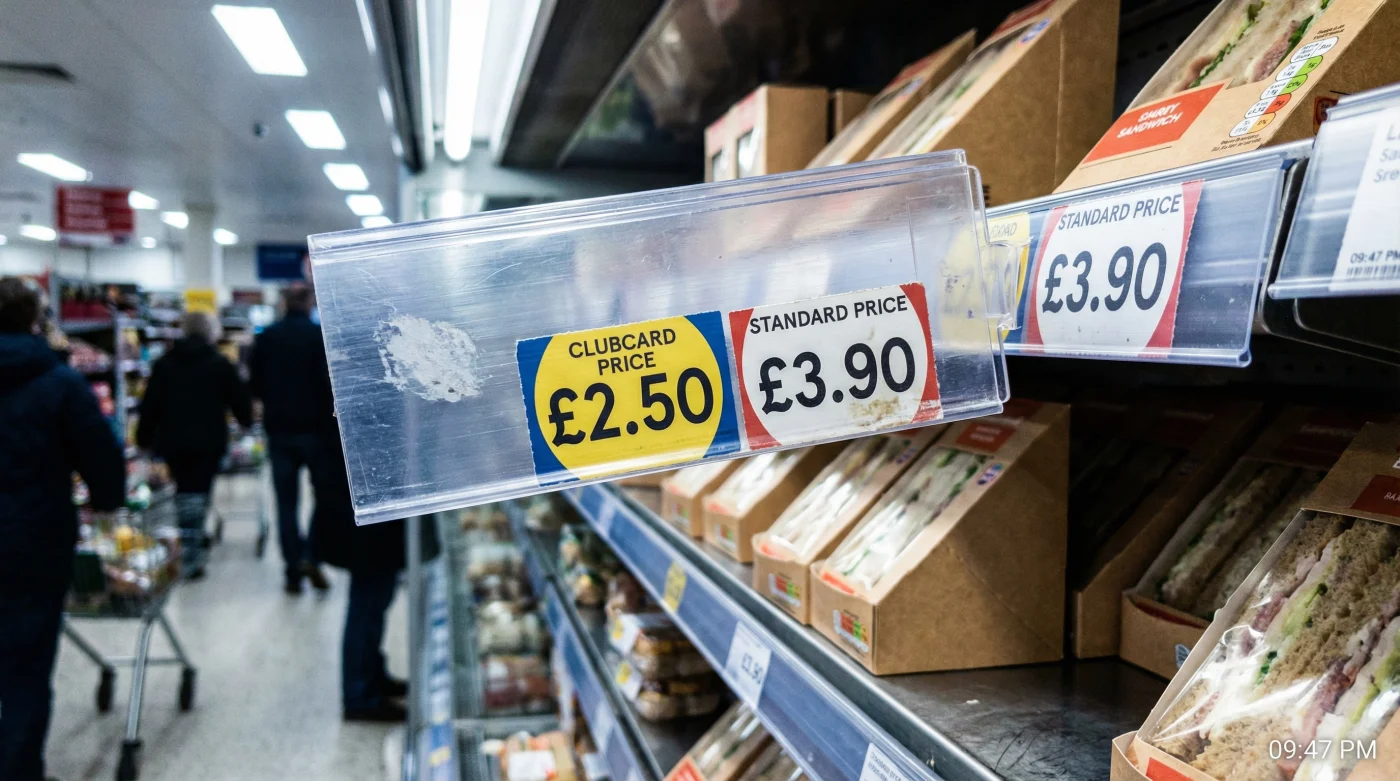
There is a specific sort of comfort found under the fluorescent strip lights of a local supermarket at twenty past twelve. You walk in out of the drizzle, shake off your coat, and head straight for the chiller cabinet. It is a ritual so deeply ingrained in the British working day that it feels less like shopping and more like an unconscious reflex. A sandwich, a bag of crisps, a cold drink. For years, this combination represented a rare moment of financial certainty in an otherwise unpredictable world.
You knew exactly what you were going to pay before you even reached into your pocket. Yet, recently, that predictable rhythm has fractured, replaced by a creeping confusion at the self-checkout till when the digital screen demands a total that simply does not match the mental maths you have relied upon for a decade.
The sandwich sits heavy in your hand as the bright red numbers flash. You scan your items, expecting the familiar flat-rate discount to apply, but instead, you are met with a subtle reconfiguration of the rules. The standard offering you blindly trusted has been quietly fenced off, reorganised behind new barriers of entry. The familiar labels have shifted, and the arithmetic of the midday pause has been entirely rewritten.
This is the reality of the modern lunchtime run. The system has silently pivoted, turning what was once a straightforward, thoughtless transaction into a daily test of your brand loyalty and shelf-reading stamina.
The End of an Inflation-Proof Era
You might feel a sting of frustration, assuming it is just another simple price hike dictated by inflation. But the mechanics beneath this change are far more intricate. The traditional meal deal operated on a beautifully simple premise: it was a loss-leader, a reliable retail magnet designed solely to get your feet through the automatic doors. It was the retail equivalent of breathing through a pillow—a soft, comforting buffer against the rising cost of living.
Now, that buffer requires active, daily maintenance. The introduction of premium tiers and strict loyalty card requirements has transformed the chiller cabinet from a reliable haven into a highly sophisticated exercise in data collection. You are no longer just buying lunch; you are actively trading your shopping habits for access to the baseline price.
If you forget your Clubcard, or if your phone battery dies before you can open the app, you face an immediate, sudden penalty at the till. What was once the unquestioned national standard is now a conditional reward, gated behind a digital barcode. The psychological safety net of the three-pound-something lunch has been pulled away.
Consider the perspective of David, a forty-eight-year-old retail pricing strategist based in Manchester. He spends his days tracking microscopic shifts in consumer behaviour across northern supermarkets. “The genius of the new pricing structure,” David observes, “isn’t in charging more for a prawn mayonnaise. It’s in making you feel fortunate to pay the old price just by scanning your card. The premium tier creates a subtle psychological decoy. Suddenly, handing over your data for a standard deal feels like a victory, even though the structural cost of your lunch has fundamentally changed.”
Mapping the New Chiller Cabinet
To navigate this subtly shifted landscape, you have to look closely at the shelf-edge labels. The days of grabbing blindly are completely over. You must begin to categorise your options, understanding exactly which tier of the supermarket ecosystem you are interacting with before you commit to your selection.
For the loyal traditionalist, the path remains somewhat familiar, provided you carry the right piece of plastic or have the app ready. If your Clubcard is scanned, you can still secure the standard sandwich, snack, and drink. However, the margins of what is included in this tier are shrinking, quietly nudging the more desirable smoothies and triple-sandwiches into a higher bracket, testing your daily spending limits.
- Cheddar cheese longevity doubles when stored outside its original plastic packaging.
- Ultra-processed bread manufacturers face severe backlash over new supermarket labelling rules.
- Tesco meal deal prices trigger customer frustration following this stealth increase.
- Dried pasta water requires significantly more salt than home cooks realise.
- Olive oil goes rancid silently when kept next to the hob.
Finally, we must consider the steep cost of anonymity. Spare a thought for the cash buyer. The occasional visitor or the person who refuses to surrender their purchasing data faces a significant markup. Without the loyalty scan, that exact same sandwich and drink combination feels like an unfair tax on simply wanting to eat lunch without leaving a digital footprint.
Strategic Provisioning for the Lunch Hour
Knowing the rules of engagement allows you to approach the chiller cabinet without the ambient dread of an unpredictable till receipt. You can take back control of your midday pause with a few deliberate, mindful actions. This is not about fighting the system; it is about reading it correctly.
Treat the brightly coloured plastic stripping on the shelf edge as your actual menu. Ignore the glossy front packaging and train your eyes solely on the yellow and white tags beneath the items. This small shift in visual focus saves you the mental friction of recalculating your spend while standing in a busy queue.
- Scan before you pick: Update your supermarket app before you leave the house or office. Ensure your digital barcode is downloaded or saved to your digital wallet for offline use, completely bypassing the notoriously poor phone reception inside express stores.
- Audit the premium options: Before committing to a higher-tier item, check the individual prices. Occasionally, buying a premium salad and a bottle of tap water separately is cheaper outside the official promotional structure.
- Watch the snack rotation: Supermarkets frequently move high-value branded crisps out of the standard deal and replace them with home-brand equivalents. Always check the specific logo printed on the promotion ticket.
- Batch your loyalty: If you regularly forget your card, take a clear screenshot of the QR code and set it temporarily as your phone’s lock screen image during your lunch hour to ensure instant access at the scanner.
Rethinking the Midday Routine
This frustration at the checkout is about far more than just pennies and pounds. It touches on a subtle loss of innocence in how we interact with our daily urban environments. The local supermarket used to ask nothing of you but a handful of change; now it demands your digital presence, your tracking data, and your unwavering attention to detail.
Yet, recognising this shift actually strips away the daily irritation. When you understand that the meal deal is no longer a public utility but a highly tuned retail strategy, you stop taking the unexpected price variations personally. You begin to see the hidden architecture of the shop floor for what it truly is.
Ultimately, your lunch break should be a moment of genuine rest, not a minor administrative battle with a self-service machine. By mastering these new boundaries and deciding in advance how you want to play the loyalty game, you protect your peace of mind. You reclaim the quiet satisfaction of a midday break, conducted entirely on your own terms.
“The modern supermarket shelf is less about displaying food, and more about negotiating the terms of your ongoing loyalty.”
| Key Point | Detail | Added Value for the Reader |
|---|---|---|
| The Clubcard Gate | Standard pricing now explicitly requires an active loyalty app scan at the till. | Prevents checkout shock and highlights the actual financial cost of anonymity. |
| Premium Tier Creep | Introduction of a higher bracket for sushi, artisan salads, and premium drinks. | Helps you quickly identify when you are accidentally straying out of your baseline budget. |
| Digital Preparation | Saving offline access to QR codes ensures smooth checkout regardless of mobile signal. | Eliminates the stress of awkwardly loading apps at the front of a busy, impatient queue. |
Frequently Asked Questions
Why did my usual lunch suddenly cost over a pound more today?
You likely selected an item that recently migrated to the premium tier, or you did not scan a valid Clubcard at the till, which instantly triggers the non-promotional individual item prices.Is the standard meal deal disappearing entirely from stores?
No, but the variety within it is actively compressing. Higher-cost ingredients and premium brands are being reserved exclusively for the upper bracket to maintain the supermarket’s profit margins.Can I still get a meal deal without giving over my personal data?
You can buy the items, but you will pay the penalty rate. The discounted price is fundamentally a trade-off; you are bartering your consumer tracking data for a cheaper sandwich.Are all supermarket branches applying these tier rules equally?
Yes, however, smaller express or local stores often have tighter stock ranges. This means standard-tier items sell out much faster, subtly forcing you into selecting the premium options by default.How can I avoid getting caught out at the self-checkout screen?
Always verify that the yellow ‘Clubcard Price’ label explicitly states ‘Meal Deal’ underneath the specific product, as some items carry standard loyalty discounts but are still excluded from the lunch bundle.