The familiar click of the kettle breaks the silence of a brisk British morning. Steam fogs the kitchen window, condensing into tiny rivers while you drop a perfectly unblemished tea bag into your favourite ceramic mug. Boiling water cascades over the paper, blooming a rich, dark amber. It smells like comfort, a roasted earthiness that promises to thaw your cold hands and wake your sleepy mind.
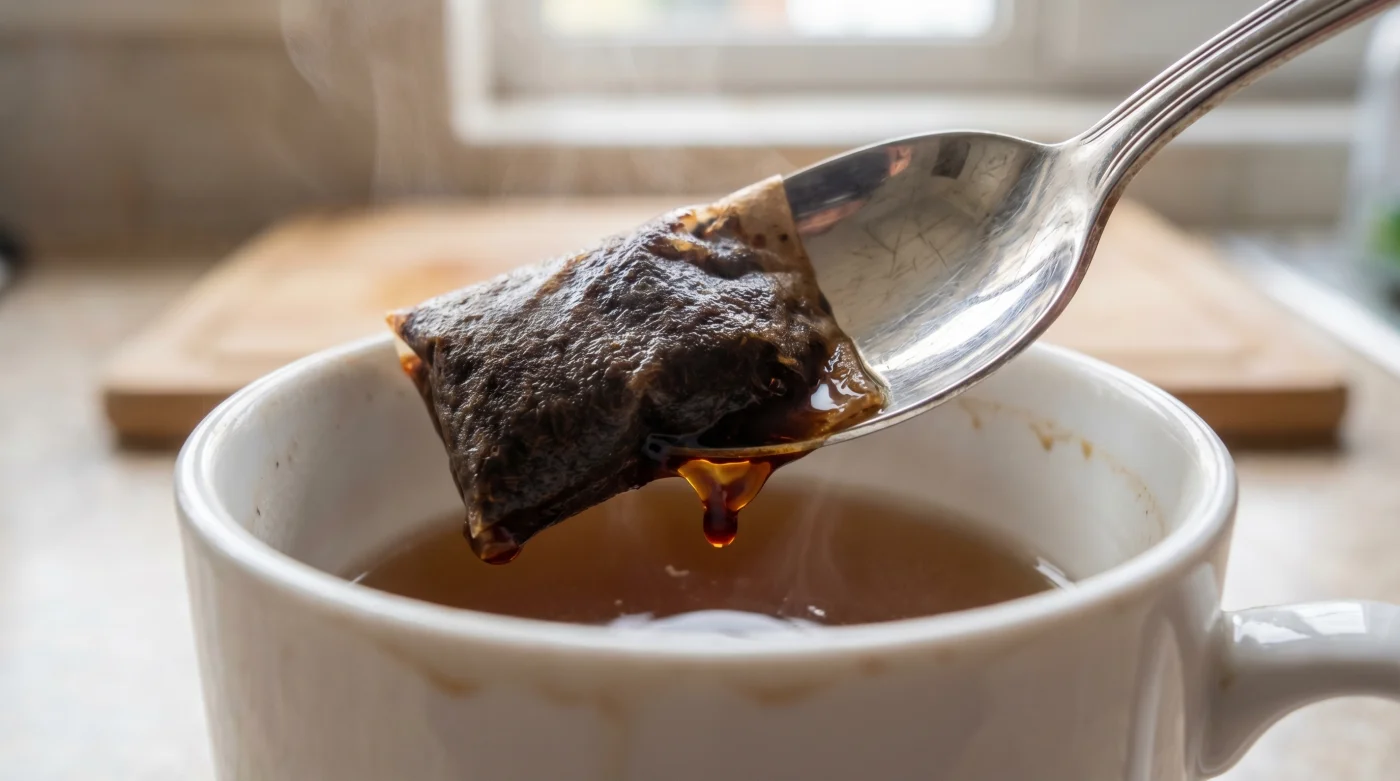
But then comes the habit. With the spoon poised like a tiny weapon, you trap the delicate bag against the curved wall of the mug. You press down, squishing every last drop of dark liquid from the fibrous casing, convinced you are extracting maximum flavour and value. You toss the battered bag into the food caddy and take a sip.
Instead of a smooth, warming embrace, your tongue meets a harsh, drying bitterness. It coats the roof of your mouth, leaving an astringent echo that demands a heavy splash of milk and two lumps of sugar just to make it palatable. We assume this is just how strong tea tastes.
The truth is, bruising the morning brew by wringing it out is a culinary misstep, a tiny domestic tragedy playing out in kitchens across the country. The professional pivot to a flawless morning cup requires nothing more than the restraint to let it be.
The Anatomy of a Bitter Drop
Think of a tea leaf as a tiny, fragile reservoir. Inside its cellular walls are hundreds of organic compounds. First to dissolve are the highly soluble amino acids and essential oils, which grant the liquid its sweet, floral, and malty characteristics. These surrender willingly to the hot water in the first few minutes.
Hiding deeper within the cellular structure are heavy, complex molecules designed by nature as a defence mechanism to deter insects from eating the plant. Tannins are fiercely bitter, and they require much more time, or physical force, to escape into your cup.
When you squeeze the paper pouch, you act as a mechanical press. You are no longer infusing; you are forcefully extracting. It is exactly like wringing out a sponge that has just soaked up muddy water from the kitchen floor.
You are forcing the worst sediment back into the clear water, bleeding pure, concentrated bitterness directly into what should be a perfectly balanced liquor. By simply stopping the squeeze, you leave the slow-releasing tannins trapped in the bag, right where they belong.
Consider Arthur Pendelton, a 58-year-old master tea blender based in Harrogate. Arthur spends his days slurping and grading leaves imported from Assam to Darjeeling. He describes the aggressive spoon-press as the single greatest crime against a good brew. “When the leaf swells in the water, it becomes physically fragile,” Arthur notes, watching the dark liquid steep in a porcelain tasting cup. His secret to the perfect cuppa isn’t an expensive, rare leaf; it is the quiet discipline of letting gravity do the heavy lifting.
Tailoring the Perfect Pour
Understanding this chemical boundary completely changes how you approach the kettle. Yet, not all cups demand the exact same handling. If you rely on a robust, dark builder’s brew to shock you awake, the lack of a squeeze might leave you feeling short-changed. To achieve that mahogany depth without the dry-mouth finish, you must increase the time, not the pressure.
For delicate blends like Earl Grey, the bergamot oil is volatile and fragile. This style relies on an aromatic subtlety that is instantly destroyed by an influx of heavy compounds. Steep for no more than three minutes, pull the bag straight up, let the final drop fall naturally, and banish the paper immediately.
Peppermint, chamomile, and fruit infusions are technically tisanes, not true teas from the Camellia sinensis plant. Because they contain virtually no tannins, you can actually squeeze these with abandon if you wish, though a long, patient steep will always yield a rounder, more naturally sweet profile.
The Silent Extraction
Mastering this simple shift requires retraining your muscle memory. The goal is to treat the morning ritual as a gentle coaxing rather than a mechanical, forceful extraction. Begin by warming the mug with a splash of boiling water, swirling it, and discarding it.
This step prevents the sudden shock that stalls the brewing process. From there, follow this tactical toolkit: pour freshly drawn, fully boiling water directly onto the bag to agitate the leaves. Wait exactly four minutes. Do not poke, prod, or stir aggressively. Slide the spoon gently under the bag, lift it vertically, and hold it suspended for three seconds.
- Use freshly drawn water; re-boiled water lacks oxygen, making the tea taste flat.
- Maintain a strict four-minute timer for standard black blends.
- Lift vertically without touching the sides of the ceramic.
Discard the bag intact, swollen, and entirely unbruised. Notice how the liquid sits differently in the mug. It is clearer, slightly more translucent at the edges, and entirely free of the cloudy suspension that usually marks an over-wrung, bitter brew.
Restraint as a Daily Practice
We spend so much of our days trying to force specific outcomes. We rush the commute, we squeeze productivity out of every minute, and we apply constant pressure to problems hoping they will magically resolve faster. The morning cup of tea is a microcosm of this modern hurry.
By deliberately choosing not to squeeze, you practice small-scale patience. You are acknowledging that the best things—whether it is the malty sweetness of a morning brew or a quiet, untouched moment before the work day begins—cannot be violently extracted or rushed.
They must be allowed to unfold gently, in their own time. You are left with a drink that is naturally sweeter, infinitely smoother, and deeply comforting. The harshness is gone, replaced by a quiet, reliable warmth that sets a completely different tone for the hours ahead.
“The finest leaf in the world is easily ruined by a heavy hand; great tea requires the humility to simply wait.” – Arthur Pendelton
| Brewing Action | Chemical Result | Value for You |
|---|---|---|
| Squeezing the Bag | Forces trapped tannins into the water. | A bitter, astringent cup requiring extra milk and sugar. |
| Lifting Vertically | Leaves bitter compounds inside the paper. | A naturally sweet, smooth, and perfectly balanced brew. |
| Increasing Steep Time | Safely extracts heavier flavour molecules. | Delivers strength and depth without the dry-mouth finish. |
Frequently Asked Questions
Does leaving the tea bag in longer make it cold?
Not if you pre-warm your mug with boiling water. This simple step retains the heat beautifully during a four-minute steep.What if I prefer a very strong builder’s tea?
Strength comes from time, not pressure. Leave the bag in for five full minutes to achieve a dark, robust liquor without the bitterness.Can I squeeze herbal tea bags?
Yes. Herbal infusions like peppermint or chamomile contain virtually no tannins, so squeezing them will not release bitter compounds.Does the type of tea bag matter?
Pyramid bags allow leaves more room to expand, reducing the urge to squeeze. However, the ‘no-squeeze’ rule applies to all standard paper bags.Why does my tea taste metallic?
This usually happens from over-boiling the kettle, which removes oxygen from the water. Always use freshly drawn cold water for the best flavour.