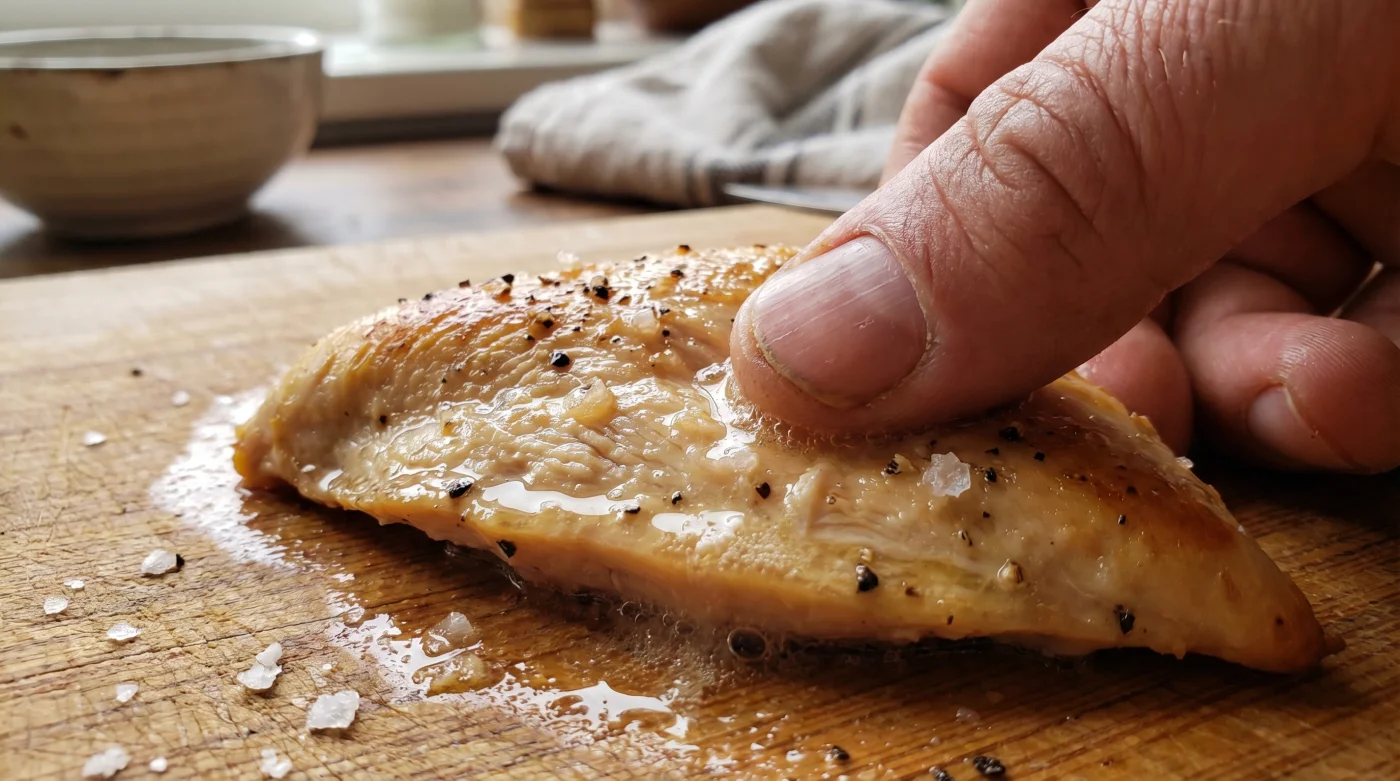
Picture a Tuesday evening in a damp London kitchen. The pan is spitting, the extraction fan is whirring like an exhausted lawnmower, and staring back at you from the chopping board is the most unforgiving protein in the British fridge: the chicken breast.
Most of us simply pan-fry it, hoping for the best but silently bracing for that familiar, chalky resistance. You pull it from the heat a fraction too late, and suddenly, you are chewing something akin to seasoned sawdust. It is a culinary gamble we lose far too often, sacrificing texture for the sake of a quick midweek supper.
But walk past the swinging double doors of any half-decent gastropub, and the reality shifts entirely. There, a chicken breast yields under a blunt knife. It holds its shape but melts in the mouth, carrying flavour right down to its absolute core. The secret separating their plate from yours isn’t a £5,000 oven or a complicated marinade. It is water, salt, and thirty minutes of doing absolutely nothing.
The Science of the Cellular Bath
Think of a raw piece of meat as a tightly clenched fist. When you apply heat directly, those muscle fibres clench even tighter, squeezing out the natural moisture until there is almost nothing left. This is why a simple dry rub rarely penetrates beneath the surface, leaving you with heavily spiced skin and totally unseasoned, dry meat underneath.
But when you introduce a brine—a simple solution of salt dissolved in water—you gently coax that fist to open. The sodium chloride breaks down the tough muscle proteins, creating tiny gaps that draw the seasoned liquid deep inside. This isn’t merely flavouring; it is fundamentally restructuring the cellular makeup of the bird. You are pre-hydrating the meat so that when the heat eventually arrives, the resulting moisture loss leaves you at the perfect baseline of tenderness.
Consider the approach of Thomas Ridley, a 42-year-old head chef running a bustling modern European kitchen in Brighton. He processes hundreds of chicken breasts a week, yet not a single piece touches a pan without first resting in a heavily salted ice bath. ‘People think I use copious amounts of butter to make the chicken soft,’ Thomas laughs, wiping down his stainless steel prep bench. ‘I don’t. I just give the meat a drink of sea salt and water before service. It builds a buffer against the heat. You can slightly overcook a brined bird, and the customer will still think you are a genius.’
Tailoring the Treatment
Not all midweek meals demand the exact same preparation. How you apply this two-ingredient professional pivot depends heavily on how much time you have and the final dish you are aiming for.
For the Time-Poor Parent: When you walk through the door at half-past five and the hunger panics have set in, a flash-brine is your best defence. Slice the breasts in half horizontally to create thinner escalopes. Submerge them in warm water (not hot) heavily seasoned with table salt. The warmth speeds up the osmotic process, giving you perfectly tenderised meat in just fifteen minutes while you boil the kettle and chop the veg.
For the Weekend Purist
If you are preparing a Sunday roast or hosting friends, precision is your priority. Use whole breasts and cold water, dissolving pure sea salt flakes before submerging the meat. Leave it in the fridge for two to four hours. The slow, gentle soak ensures an entirely uniform texture from edge to centre, allowing you to pan-roast with absolute confidence.
The Freezer Prepper
For those bulk-buying at the supermarket to navigate the rising cost of living, you can combine the soaking process with your storage strategy. Brine your raw poultry directly in the freezer bag alongside your water and salt mixture. As it slowly thaws in the fridge days later, it absorbs the moisture, effectively doing the prep work while you sleep.
Executing the Professional Pivot
Mastering this technique requires very little effort, but it does demand a tiny bit of mindfulness. You must treat the ratio of salt to water with the same respect a baker gives their flour and yeast.
If the solution is too weak, you are just giving the meat a pointless bath. If it is too strong, you cure the edges and end up with something resembling a salty tyre. Find the middle ground by trusting precise measurements over hurried guesswork.
Here is your Tactical Toolkit for the perfect 30-minute standard soak:
- Measure exactly 1 litre of cold tap water into a large mixing bowl.
- Whisk in 60 grams (roughly four tablespoons) of fine sea salt until the water runs completely clear.
- Submerge up to four medium chicken breasts, ensuring they are entirely covered by the liquid.
- Rest in the fridge for exactly 30 minutes, then rinse thoroughly under cold water and pat completely dry with kitchen roll before cooking.
A Quieter Confidence in the Kitchen
It seems almost too simple, doesn’t it? The idea that cold tap water and a handful of cheap salt could be the single difference between a stressful supper and restaurant-tier satisfaction. Yet, this is exactly how professional kitchens operate. They do not rely on magic; they rely on reliable, quiet chemistry.
When you adopt this habit, you stop fighting the ingredients. You are no longer anxiously prodding a pan, terrified of crossing the invisible line between raw and ruined. You are buying yourself time, an insurance policy against the harsh reality of high heat. You can finally sit down to eat tender chicken, knowing the frantic guesswork has been permanently retired.
‘The defining trait of a great cook isn’t an expensive knife collection; it is understanding how to gently persuade an ingredient to behave under pressure.’
| Method | The Detail | Added Value for You |
|---|---|---|
| The Flash Soak | 15 mins in warm salted water (thin cuts). | Saves dinner when you are entirely out of time. |
| The Standard Bath | 30 mins in cold salted water. | Creates a foolproof buffer against accidental overcooking. |
| The Thaw-Brine | Saltwater frozen directly with the meat. | Zero-waste preparation that happens automatically. |
The Brining Clinic
Will this make my dinner taste far too salty?
Not at all. The salt alters the protein structure rather than just sitting on the surface. Rinsing the meat before cooking removes excess surface sodium.Can I use standard table salt instead of sea salt?
Yes, but use slightly less. Table salt crystals are finer and pack more densely, meaning a tablespoon holds far more sodium than a tablespoon of flaky sea salt.Should I still season the chicken in the pan?
Skip salting the outside right before cooking. You can aggressively apply pepper, paprika, or herbs, but let the internal soak handle the salt seasoning.Does this work for thighs and drumsticks?
Absolutely. Dark meat already holds more fat and moisture, but a short soak will still significantly improve the texture and flavour penetration right down to the bone.Can I leave it in the water overnight?
Avoid this. Leaving small cuts of poultry in a strong salt solution for over four hours will break down the meat too far, turning the texture slightly mushy instead of pleasantly tender.