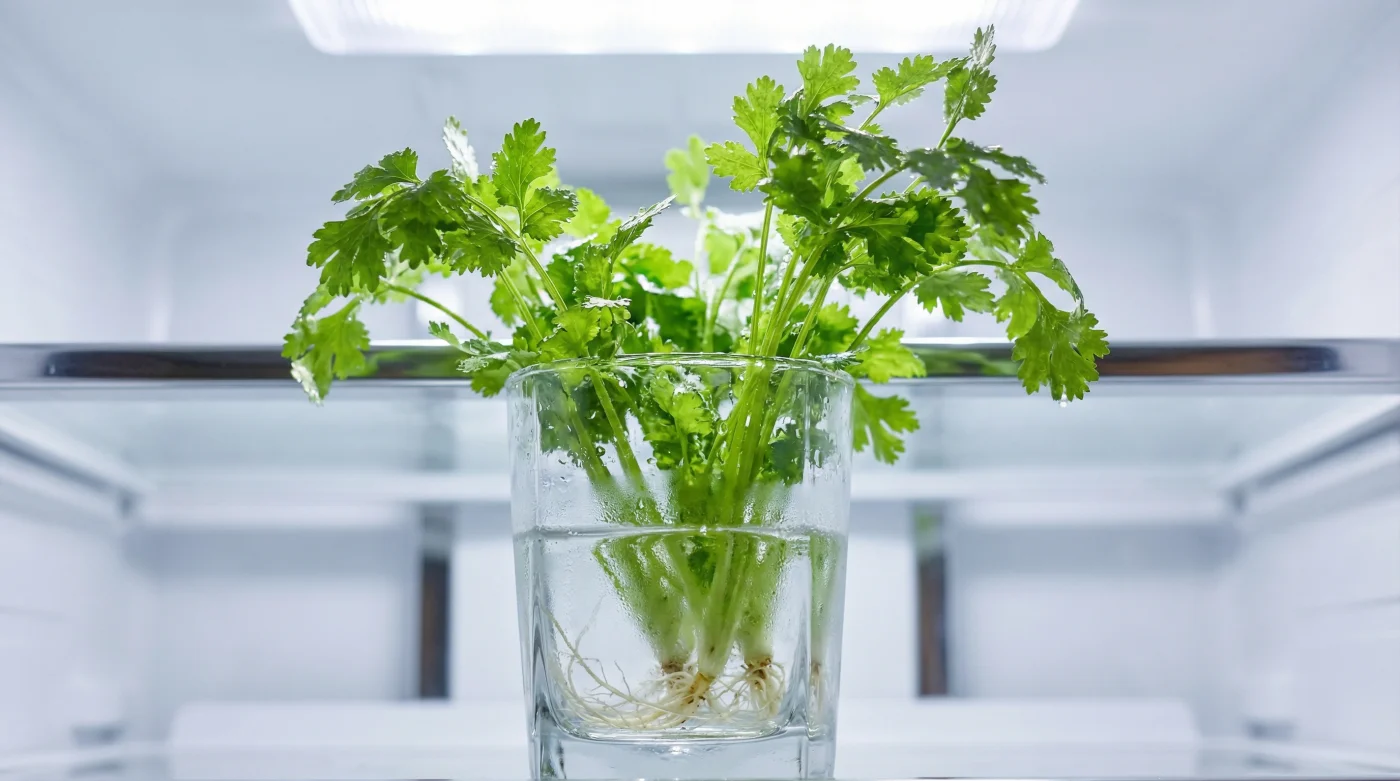
You pull the bottom drawer of the fridge open, reaching for that bunch of fresh coriander you bought on Friday. Your fingers meet the cold, damp plastic of the supermarket sleeve, and you already know what awaits inside. The vibrant, peppery leaves that looked so promising in the shop have collapsed into a sad, wilted shadow of their former selves.
You slide the stems out, only to find the lower half has melted into a dark, slimy green sludge. The sharp, bright aroma is gone, replaced by the unmistakable, swampy scent of organic decay. You toss it into the compost bin, making a mental note to rely on dried jars next time.
We have collectively accepted this rapid deterioration as a normal tax on buying fresh produce. You bring soft stems into your kitchen knowing they have an invisible, punishingly short timer attached to them. It feels like an unsolvable flaw in modern grocery shopping, a minor daily frustration that slowly drains your food budget.
But the failure does not lie with the plant itself; it lies entirely in how you store it. Treating a fragile, water-dependent stem like a hardy root vegetable steals your culinary confidence and guarantees food waste. The real solution requires looking past the kitchen entirely and borrowing a fundamental rule from a completely different trade.
The Perspective Shift: From Pantry to Floristry
The mistake begins the moment you unpack your shopping bags. You treat a bundle of coriander as a finished, static product—much like a bag of flour or a packet of biscuits. You toss it into the crisper drawer, assuming the cold air is enough to preserve its life force.
In reality, those cut stems are amputated living organisms desperately trying to drink. When you lay them horizontally in a dry, cold box, the vascular system within the stems closes up. They suffocate, dehydrate, and begin to rot from the inside out within forty-eight hours.
Imagine bringing home an expensive bouquet of cut roses for a celebration. You would never dream of throwing them horizontally into a dark cupboard in their plastic wrapping. You would instinctively trim the ends and stand them upright in fresh water, giving them the exact environment they need to survive.
Applying this exact same logic to your groceries halts the decay process immediately. Soft kitchen stems—specifically coriander, parsley, and mint—possess the exact same capillary systems as ornamental flowers. By shifting your perspective from storing food to hydrating a living plant, you completely change the timeline of your ingredients.
The Bermondsey Archway Epiphany
I learned this from Elias, a 42-year-old florist who operates out of a damp, cavernous railway arch in Bermondsey. He spends his days surrounded by buckets of delicate ranunculus and temperamental hydrangeas. One damp November morning, as he meticulously stripped the lower leaves off a batch of stems, he noticed me watching the pile of discarded greens.
He paused, holding up a bare green stalk, and explained that leaves submerged in water act as a direct invitation for bacterial rot. He told me that any foliage sitting below the water line breaks down instantly, clouding the water and poisoning the very plant it is attached to. It was a throwaway comment meant for tulips, but the kitchen application clicked into place like a key turning in a lock.
Adapting the Method for Your Kitchen Routine
- Cheddar cheese longevity doubles when stored outside its original plastic packaging.
- Ultra-processed bread manufacturers face severe backlash over new supermarket labelling rules.
- Tesco meal deal prices trigger customer frustration following this stealth increase.
- Dried pasta water requires significantly more salt than home cooks realise.
- Olive oil goes rancid silently when kept next to the hob.
If you are a batch cook who likes a highly organised fridge, strip the lower foliage completely. Remove the elastic band that chokes the bundle, pick off the bottom five centimetres of leaves, and prepare the stalks for a clean submersion. This gives you a pristine jar of ready-to-snip garnishes that will last for almost a month.
If you only use coriander occasionally for weekend curries, your focus should be on creating a high-humidity microclimate. You need to trap the moisture around the delicate top leaves while keeping the roots hydrated. The method is the same, but you will add a simple protective barrier to keep the harsh fridge fan from drawing out the moisture.
The Five-Minute Hydration Protocol
Creating this upright conservatory takes less time than waiting for the kettle to boil. You do not need any specialist equipment; a heavy glass jar and a pair of sharp kitchen scissors are your only requirements. Follow these minimalist actions strictly, and you will dramatically extend the lifespan of your fresh goods.
Your tactical toolkit for this method relies on clean cuts and proper water management. First, use sharp scissors to snip roughly two centimetres off the bottom of the coriander stems at an angle to increase the surface area for water absorption. Second, fill a heavy glass jar with just a few centimetres of cold tap water, ensuring absolutely no leaves sit below this waterline. Third, place the jar on a shelf in the main body of the fridge, not in the door where temperature fluctuations are extreme. Fourth, place an inverted sandwich bag loosely over the top of the leaves, allowing the bottom to breathe so condensation can escape. Finally, pour out and replace the water every three to four days, or whenever it begins to look slightly cloudy.
The loose plastic bag acts exactly like a miniature greenhouse, trapping the ambient humidity that the plant transpires. It prevents the aggressive, dry cold of the refrigerator from scorching the fragile tips, keeping them vividly green and crisp enough to snap between your fingers.
Redefining Kitchen Scarcity
There is a quiet, profound satisfaction in pulling a jar of perfectly upright, vibrant green stems from your fridge three weeks after you bought them. The leaves tremble slightly as you chop them, retaining all their bright, citrusy oils and a sharp crunch that brightens a Tuesday night dahl into something special.
You stop looking at your weekly grocery shop as a race against time. You no longer feel that familiar twinge of guilt when throwing out spoiled food, and you naturally begin to experiment more with fresh flavours because they are always there, waiting in pristine condition. Mastering this single, frugal detail transforms your kitchen from a place of rapid spoilage into a space of enduring abundance.
The greatest trick to ending food waste is realising that your ingredients are still breathing long after you bring them home.
| Key Point | Detail | Added Value for the Reader |
|---|---|---|
| The Cut | Snip bottoms at a 45-degree angle | Increases water absorption, stopping immediate wilting. |
| The Water | A few centimetres of fresh tap water, no submerged leaves | Prevents slimy bacterial growth and foul smells. |
| The Hood | A loose plastic bag draped over the top | Creates a micro-greenhouse, blocking dry fridge air. |
Frequently Asked Questions
Can I use this method for woody herbs like rosemary?
No, woody stems prefer to be wrapped in a damp paper towel and kept in a sealed container in the crisper drawer.Do I need to wash the coriander before putting it in the jar?
Wash only the leaves you are about to use. Washing the whole bunch before storage introduces excess moisture that causes rot.Why does the water go cloudy?
Cloudy water indicates bacterial growth, usually from a stray leaf left below the waterline. Change the water immediately and trim the stems again.Should I keep the elastic band on the bunch?
Always remove the elastic band. It constricts the stems and prevents water from travelling up the vascular system.Can I store this jar on the kitchen counter instead?
Only if your kitchen is consistently cool. The fridge slows down the metabolism of the plant, ensuring it lasts for weeks rather than days.