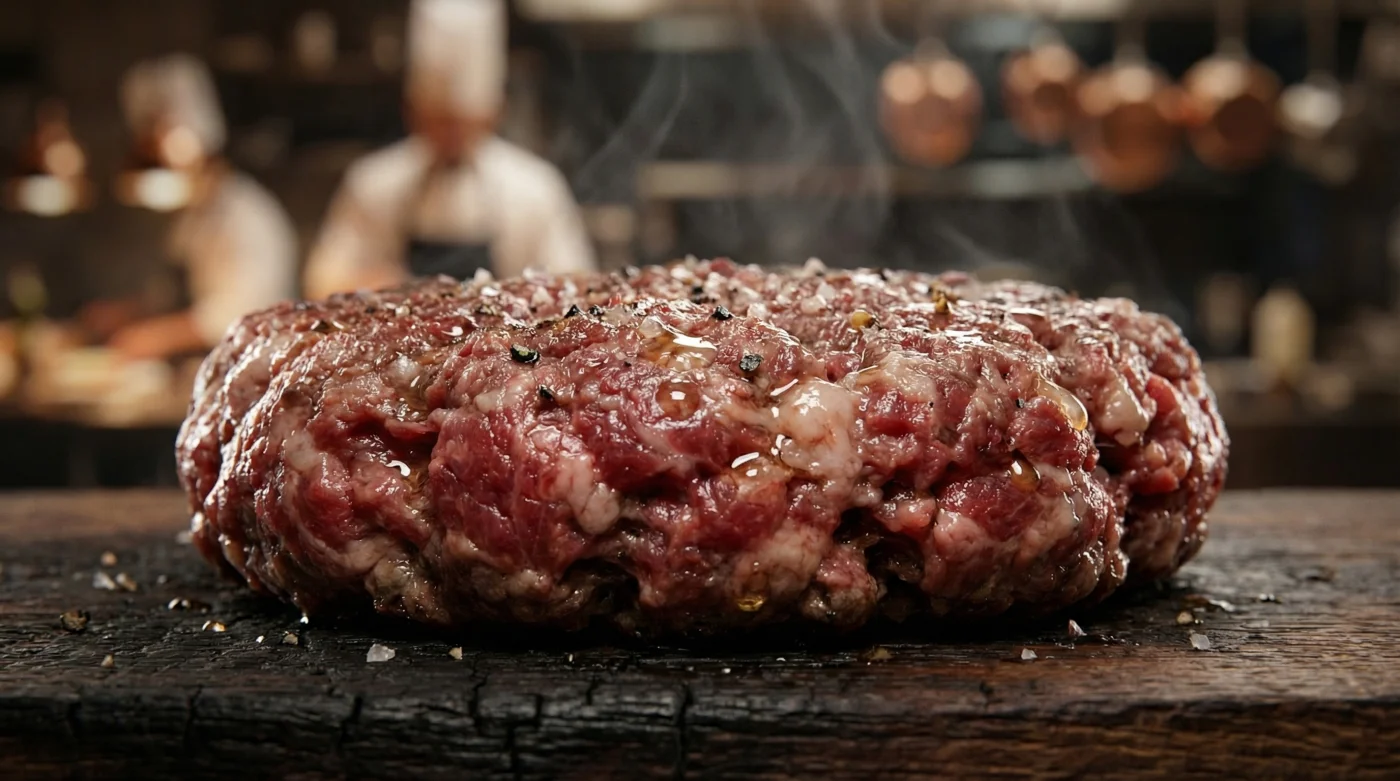
Imagine standing at the pass of a bustling local gastropub on a Friday evening. The air is thick with the scent of rendering beef fat and charred iron, a heavy, savoury perfume that clings to your jumper long after you leave. You take a bite of their signature burger, and the crust shatters slightly before yielding to a deeply savoury, almost liquid core.
You have likely tried to recreate this exact sensation in your own kitchen. You buy the premium extra-lean mince from the local butcher or the supermarket’s finest range, press it firmly into perfect discs, and watch in quiet despair as they shrink into grey, weeping hockey pucks in your frying pan. You blame your cooking technique, assuming the pubs have some magical flat-top grill that defies the laws of thermodynamics.
The truth is far less mystical, though it requires a slight recalibration of how you view meat. The pub down the road is not out-cooking you; they are out-sourcing you. They understand that a burger is not simply ‘beef’ moulded into a circle, but a highly specific emulsion waiting to happen.
Standard home mince fails because it was designed for versatility, not structural integrity. It is meant to simmer happily in a bolognese or bulk up a cottage pie, leaning heavily on lean cuts that lack the specific lipid structure required to survive a screaming-hot iron skillet.
The Architecture of Melting
When you attempt to make a pub-quality burger with standard 5% or even 12% fat mince, you are effectively trying to bake a cake without butter. The secret lies in understanding that a burger relies on two very specific roles: the muscular chew and the melting binder.
Think of the perfect patty as a delicate lipid suspension. The protein provides the framework, the physical bite that tells your brain you are eating a substantial meal. The fat, however, is the central heating system. It needs to melt at the exact moment the crust forms, basting the protein strands from the inside out.
This is where the professional pivot comes into play. You need to abandon the convenience of the pre-packaged tray and look towards a two-ingredient modification that changes everything.
Consider the approach of Arthur Pendelton, a 48-year-old head chef who has spent the last two decades running the kitchens of London’s most heavily awarded gastropubs. He spends his mornings aggressively negotiating with his suppliers for a very specific, uncompromising ratio: 70% chuck steak and 30% brisket fat.
“People think a good burger is about throwing expensive fillet or sirloin into a grinder,” Arthur told me recently whilst pressing patties onto greaseproof paper. “It’s entirely backwards. You need the hardworking muscles for iron-rich flavour, and you need brisket fat because it holds its shape just long enough before collapsing into pure, beefy butter on the tongue.”
Fortunately, adapting his professional blueprint to your weekly shop is entirely manageable once you know what to ask for. Not everyone has a commercial meat grinder bolted to their kitchen counter.
Adjustment Layers for Your Kitchen
- Cheddar cheese longevity doubles when stored outside its original plastic packaging.
- Ultra-processed bread manufacturers face severe backlash over new supermarket labelling rules.
- Tesco meal deal prices trigger customer frustration following this stealth increase.
- Dried pasta water requires significantly more salt than home cooks realise.
- Olive oil goes rancid silently when kept next to the hob.
For the Busy Parent: When Tuesday evening demands a quick supper and the supermarket is your only option, look closely at the labels. Bypass the premium steak mince and search for the cheapest, fattiest beef mince you can find, typically labelled 20% fat. Mix it gently with a small pack of pulsed braising steak to bridge the gap between convenience and structural integrity.
For the Iron Deficient: Sometimes you want the nutritional hit of offal without the intense flavour profile. Many old-school pubs secretly blend a tiny amount of chicken liver into their chuck ratio.
It completely melts away during cooking, leaving behind a profound, dark richness that mimics dry-aging without the astronomical price tag or the metallic aftertaste that puts so many people off.
The 5-Minute Professional Prep
With your chuck and brisket blend secured, the final hurdle is how you handle it. Over-working the meat is the cardinal sin of the home cook. You must treat the mince as though it is fragile, handling it with cold hands and brief, deliberate movements.
Your hands should work gently, like a soft press rather than a kneading machine. When you compact the meat too tightly, the proteins cross-link, ensuring your burger will bounce rather than crumble.
- Keep the meat aggressively cold until the exact second it hits the pan.
- Weigh your portions to exactly 160g for the perfect pub-style thickness.
- Form a gentle dimple in the centre of the patty with your thumb to prevent swelling.
- Season the outside generously with coarse sea salt only just before cooking.
The Tactical Toolkit requires a heavy cast-iron or carbon steel pan, heated until it is uncomfortably hot to hold your hand above. Aim for a cooking time of three minutes per side to achieve a blushing medium-rare.
Do not press down on the meat with your spatula once it is cooking. Every sizzle you hear when you press is the sound of your pub-quality juiciness evaporating into the extractor fan.
Reclaiming Your Kitchen Confidence
Mastering this simple ratio of chuck to brisket is about more than just recreating a pub lunch. It is a quiet rebellion against the processed, homogenised food systems that tell us we cannot achieve greatness within our own four walls.
When you stop buying into the myth of the perfect pre-packaged mince, you reclaim a small but vital piece of culinary independence. You learn to speak the language of raw ingredients, understanding how heat, fat, and protein interact in a chaotic but beautiful dance.
The next time the rain is lashing against the windows and a pub trip feels too daunting, you will not have to settle for a dry, disappointing imitation. You will pull that 70/30 blend from the fridge, drop it into a smoking hot pan, and smell that exact, heavy, savoury perfume filling your own home.
“The difference between a good burger and a great one is entirely decided before the meat ever touches the heat.”
| Key Point | Detail | Added Value for the Reader |
|---|---|---|
| The Mince Myth | Supermarket meat lacks correct lipid structure. | Saves you from blaming your own cooking skills. |
| The 70/30 Rule | 70% Chuck, 30% Brisket Fat. | Provides restaurant-level mouthfeel and flavour at home. |
| The Cold Handle | Never over-knead; keep the meat chilled. | Prevents tough, rubbery textures in the final bite. |
Frequently Asked Questions
Can I just use 20% fat supermarket mince? It is better than lean mince, but adding pulsed braising steak helps replicate the proper structural bite. Do I need to bind the burger with egg or breadcrumbs? Absolutely not; a true pub burger relies solely on the protein strands binding together under gentle pressure. Why does my burger turn into a meatball? As the meat cooks, the connective tissue shrinks; pressing a dimple into the centre before cooking prevents this doming. What is the best cheese for a gastropub blend? A mature Red Leicester melts beautifully while offering enough sharpness to cut through the heavy brisket fat. Should I salt the mince before forming the patties? No, salting early draws out moisture and creates a sausage-like texture; only season the exterior right before cooking.