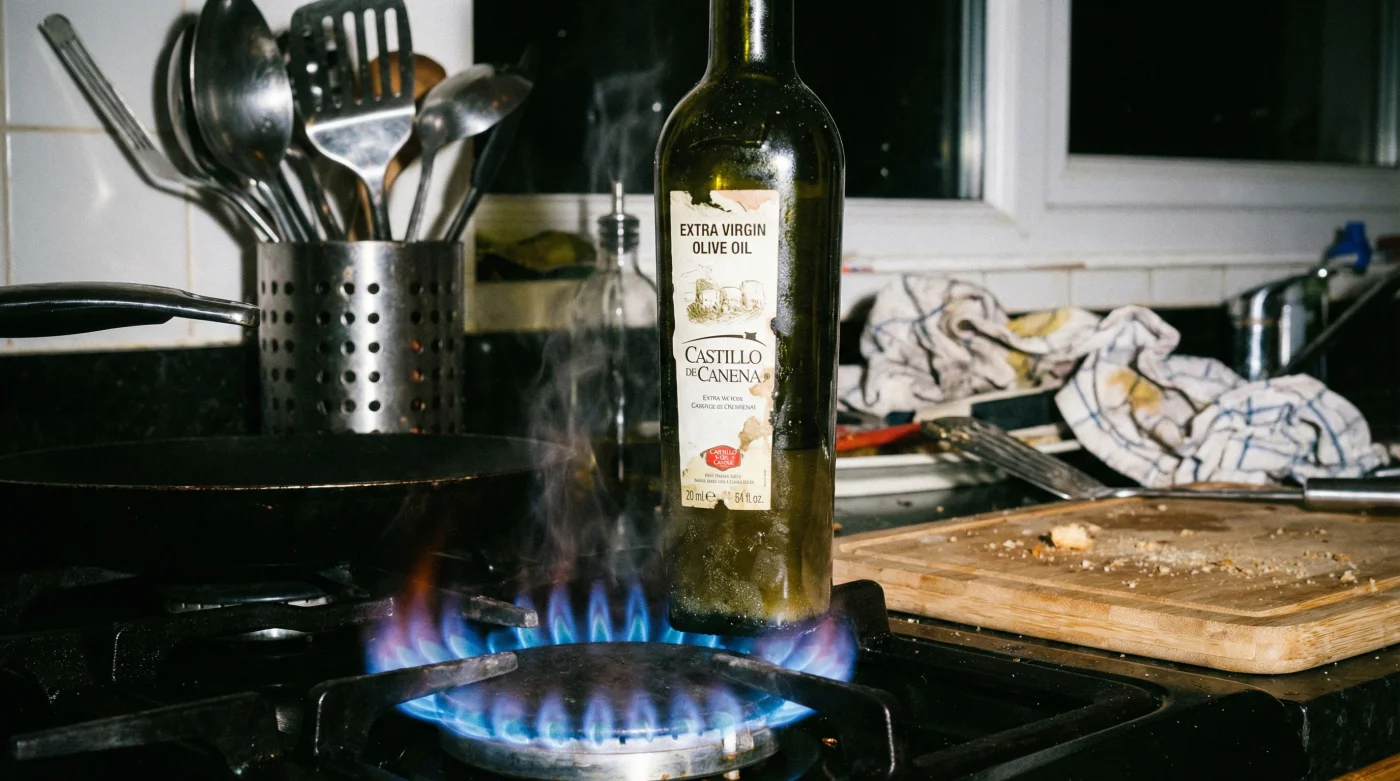
You reach for the heavy glass bottle sitting dutifully beside the glowing rings of your hob. It is a familiar rhythm—grab, uncap, pour—accompanied by the scent of warming garlic and the sharp snap of onions hitting the pan. This is how you learned to cook, keeping your most vital tools precisely where the action happens.
But while you stir and season, a quiet degradation is unfolding inside that tinted glass. The gentle, ambient warmth radiating from your burners feels like mere kitchen atmosphere, but to the fragile compounds within your olive oil, it acts as a slow, invisible furnace eroding the liquid within.
We prize convenience above almost everything else when assembling our evening meals. Yet, this instinct to keep our most valuable cooking fats within an arm’s reach of the flame creates a silent, expensive tragedy. The oil does not spoil with a dramatic, rancid odour immediately; instead, it loses its soul, drop by drop, as the vibrant pepperiness fades into a flat, greasy whisper.
It is easy to ignore this shift because the decay is so remarkably subtle. By the time you notice the metallic, waxy notes coating the back of a spoon, you have already spent weeks drizzling compromised, tired fats over your carefully prepared salads and roasted vegetables.
The Perspective Shift: Protecting The Liquid Harvest
Think of high-quality olive oil not as an inert pantry staple, but as fresh produce—a living, breathing juice pressed from autumnal fruit. Leaving it beside the hob is entirely akin to leaving a vase of freshly cut flowers resting directly upon a humming radiator.
The friction lies in what you cannot readily observe. Polyphenols, the microscopic antioxidants responsible for that sharp, peppery catch at the back of your throat, are fiercely delicate defence mechanisms. When subjected to the constant, fluctuating micro-climates of a busy cooking space, they fracture and break down long before their time.
It is a profound shift in perspective to realise that the warmth meant to bring your food to life is actively stripping the vitality from your ingredients before they even touch the pan. You are not merely storing a bottle; you are deciding how quickly its vibrant, grassy notes will mutate into the dull, waxy taste of old crayons.
Heat acts as a relentless accelerator for oxidation, driving the chemical reactions that turn vibrant green gold into a flat, heavy liquid. Every time the hob flares to boil a kettle or simmer a ragù, the ambient temperature spike steals days of freshness from your most prized kitchen staple.
The View from the Tasting Room
Thomas, a forty-two-year-old artisan importer who spends his autumns sourcing early-harvest oils in Andalusia for independent Bristol grocers, often laments the Great British habit of hob-side storage. He spends his working life chasing the perfect, peppery bite of raw polyphenols, only to watch his customers casually destroy them at home.
“People happily spend twenty pounds on a vibrant, single-estate bottle,” he noted recently over a bitter espresso in a damp Cornish café, “and then they slowly boil it alive for six months right next to the frying pan.” His golden rule is ruthless but effective: treat your finishing oils with the paranoid care of fine wine, banishing them to the darkest, coolest corner of the room.
Thomas’s frustration highlights a fundamental misunderstanding of what cold-pressed actually means in a domestic setting. The producers went to immense, painstaking lengths to extract this oil without generating friction or heat, precisely to preserve the delicate structural integrity of the botanical fat.
Eradicating this habit requires a tailored approach based on movement around your kitchen. If you cook three meals a day, entirely hiding your primary cooking fat in a distant, cold cellar is simply not going to last more than a week.
Tailoring Your Pantry Strategy
For the Daily Scrambler
You need speed, but you refuse to sacrifice basic nutrition or suffer through flat flavours. The most practical compromise here is the practice of micro-decanting, which separates your immediate supply from your main reserve, protecting the bulk of your investment from the daily thermal assault of the hob.
Purchase a tiny, dark ceramic dispenser and keep it on the counter containing just enough oil for three days of frying and tossing. The original, larger bottle remains tightly sealed in a low, cool floor cupboard positioned safely away from the oven’s residual heat.
For the Purist
- Cheddar cheese longevity doubles when stored outside its original plastic packaging.
- Ultra-processed bread manufacturers face severe backlash over new supermarket labelling rules.
- Tesco meal deal prices trigger customer frustration following this stealth increase.
- Dried pasta water requires significantly more salt than home cooks realise.
- Olive oil goes rancid silently when kept next to the hob.
Store this premium oil in its original tin, or a dark glass bottle wrapped tightly in thick paper. It belongs in a dark pantry or a temperature-controlled larder that never breaches fifteen degrees Celsius, preserving every single volatile flavour compound.
Mindful Application: The Countertop Reset
Protecting your olive oil does not require a dramatic kitchen remodel or expensive preservation gadgets. It merely demands a mindful restructuring of your daily habits and a sharper awareness of your immediate cooking environment.
Start by physically assessing the thermal zones of your specific workspace. Any cupboard sharing a wall with the oven, the dishwasher, or a radiator must be disqualified immediately from use. You are looking for a stable, dark sanctuary where the temperature remains entirely indifferent to whether you are boiling pasta or roasting a Sunday chicken.
Here is your tactical toolkit for preserving that peppery bite:
- Decant with purpose: Only transfer what you will physically consume within a week into a small, thoroughly opaque cruet.
- Monitor the seal: Oxygen is the second great enemy; wipe the rim meticulously after pouring and screw the cap on tightly to prevent airborne oxidation.
- Mind the vintage: Treat raw olive oil exactly like fresh fruit juice. Check the harvest date printed on the back and commit to finishing the bottle within three months of opening.
- The temperature check: Ensure the storage location sits comfortably between 14°C and 18°C. Cold enough to slow degradation, but warm enough to prevent the fats from solidifying into cloudy clumps.
This routine should feel less like a rigid set of culinary rules and more like a gentle maintenance of your domestic tools. By implementing these tiny barriers against heat, light, and air, you secure the nutritional value that drew you to the oil in the first place.
The Bigger Picture
Moving that bottle away from the burner might feel like a minor inconvenience at first, a slight disruption to your familiar, hurried domestic choreography. But it represents a quieter, deeper respect for the raw materials that actively nourish you.
When you stop treating olive oil as an indestructible industrial lubricant and begin treating it as a fragile, botanical extract, every single meal improves. You are no longer just thoughtlessly cooking; you are curating and preserving flavour right up until the moment it hits the plate.
There is an undeniable peace of mind in knowing that the sharp, vibrant drizzle finishing your minestrone soup carries the exact same vitality it had the day it left the olive mill. You have successfully rescued the quiet brilliance of your ingredients from the silent, invisible decay of the kitchen counter.
Ultimately, the way we store our food dictates the respect we have for our own health and enjoyment. Making this one microscopic adjustment shifts your entire kitchen ecosystem towards a standard of professional excellence.
Treat your kitchen like a cellar, and your oils will reward you with the vitality of a fresh harvest.
| Key Point | Detail | Added Value for the Reader |
|---|---|---|
| Light Exposure | Tinted glass blocks some UV, but ambient kitchen light still degrades antioxidants over time. | Preserves the peppery finish of your oil for months longer. |
| Heat Fluctuation | Ambient heat from hobs causes microscopic expansion and contraction in the oil. | Prevents the fat from developing a stale, waxy aftertaste. |
| Oxygen Seepage | Leaving pourers uncapped allows airborne bacteria and oxygen to react with the oil. | Ensures you ingest intact polyphenols, securing the health benefits. |
Frequently Asked Questions
Can I store my olive oil in the fridge to keep it fresh? It is not entirely necessary and can cause the fats to solidify and turn cloudy. A dark cupboard at room temperature is perfectly adequate.
How long does a bottle actually last once opened? Ideally, you should aim to consume it within three months. After that, even well-stored oil begins to lose its vitality and sharp flavour.
Does the dark green bottle protect it from the heat? The dark glass is designed to filter out ultraviolet light, but it offers zero insulation against ambient temperature spikes from your oven.
Can I still cook with oil that has lost its peppery bite? Yes, provided it does not smell distinctly rancid like old putty. However, it is best relegated to baking or roasting rather than finishing a dish.
Are ceramic decanters better than glass? Ceramic entirely blocks out light, making it a vastly superior choice for any oil that must remain on the countertop for daily use.