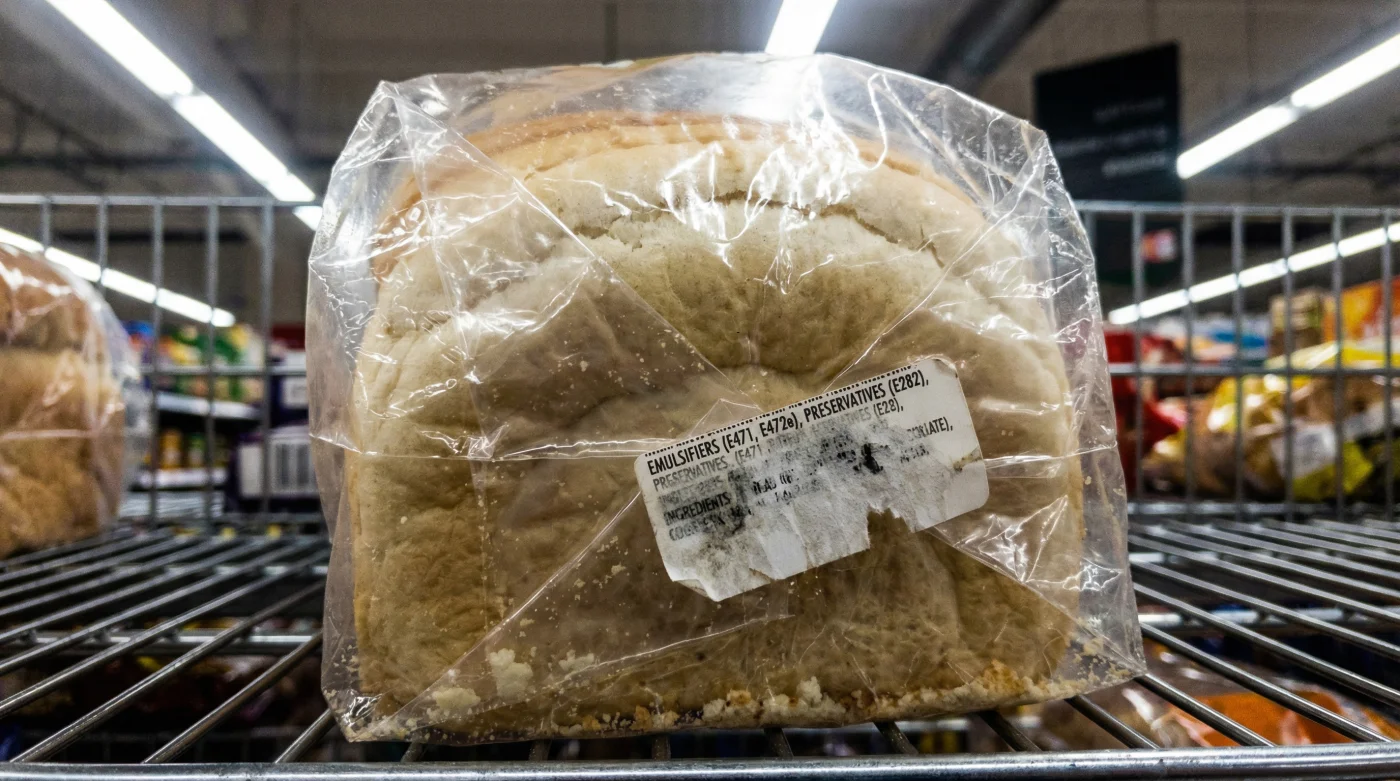
It’s 7:15 on a damp Wednesday morning. You stand by the kettle, watching the rain blur the streetlamps outside, reaching blindly into a plastic bag for a slice of white bread. The texture is familiar. It yields to your fingers like a memory-foam pillow, perfectly square, without a single erratic air bubble. You drop it into the toaster, expecting comfort.
But pause for a moment to consider the slice in your hand. That unnerving softness, surviving ten days past its purchase date without a fleck of mould, isn’t a triumph of modern baking. It is a chemical stall tactic, designed to mask the rapid staling process of mass-produced wheat.
The comforting smell of browning flour hides a complex industrial reality. British supermarkets are currently preparing for a seismic regulatory shift, forcing manufacturers of ultra-processed bread to finally declare the extent of their chemical scaffolding. The resulting backlash from the industry is deafening.
You are about to see glaring warning labels slapped across the very loaves you grew up eating. Suddenly, that seemingly innocent staple of a quick cheese sandwich or a proper bacon butty becomes a contested nutritional battleground.
The Edible Scaffold Beneath the Crust
When you bake a loaf at home, flour, water, yeast, and salt perform a natural, chaotic dance. Real bread is unpredictable. It dries out. It fights back when you tear it. Commercial sliced loaves, however, are built more like an engineered polymer than a foodstuff. Think of it as constructing a house from pre-fabricated plastic panels rather than laying brick and mortar.
The incoming supermarket labelling rules target this specific deception. Manufacturers are furious because they must now explicitly warn you about the emulsifiers and preservatives keeping their products artificially suspended in time. What you once thought was a guarantee of value—a loaf lasting three weeks—is abruptly revealed as the ultimate red flag.
Dr Harriet Finch, a 42-year-old food structural engineer based in Leeds, spent a decade formulating the dough conditioners used in Britain’s best-selling loaves. She describes the commercial mixing vat not as a bakery, but as a laboratory managing volatile reactions. “We weren’t baking,” Harriet noted during a recent select committee hearing. “We were forcing water and cheap fat to bind using synthetic emulsifiers, just to stretch the profit margins by a few pence.” Her testimony became the catalyst for the new mandate, exposing how ingredients like mono- and diglycerides of fatty acids silently disrupt our digestive lining.
Decoding the New Supermarket Shelf
The impending regulations will shatter the uniformity of the bread aisle. You will soon notice stark, mandatory warnings beneath the nutritional traffic light systems. Adapting to this shift requires understanding exactly what these labels mean for your daily routine.
For the Packed Lunch Parent
If you rely on pre-sliced soft bread for the children’s sandwiches, the new ‘Emulsifier Warning’ will be the most jarring. These compounds, historically hidden within the E-number lists, are responsible for that pillowy texture. Under the new rules, brands must state if their emulsifiers are linked to gut microbiome disruption. You will have to choose between convenience and biological clarity.
For the Toast Traditionalist
Perhaps your priority is the morning crunch. Here, you must navigate the newly mandated preservative declarations. Calcium propionate, an anti-fungal agent sprayed onto the crust, will now carry a distinct, high-contrast label. Manufacturers argue it reduces food waste; regulators point out it masks poor hygienic production standards.
For the Supermarket ‘Artisan’ Buyer
Do not assume the crusty, flour-dusted boules in the in-store bakery are exempt. Many of these ‘freshly baked’ items arrive frozen, packed with ascorbic acid and artificial improvers to survive the blast-chilling process. The new rules force retailers to clearly separate genuinely fermented sourdough from artificially soured yeast breads.
Mindful Navigation of the Bread Aisle
Walking into the supermarket next month will feel entirely different. Rather than grabbing the familiar blue or red packaging out of habit, you need a precise strategy to filter the noise.
The goal is to strip away the marketing claims and interrogate the raw materials listed on the back of the bag.
Start by performing a tactile assessment. A quality loaf should offer some resistance; it should not collapse like a deflated balloon under mild pressure. Next, turn the packet over.
- Cheddar cheese longevity doubles when stored outside its original plastic packaging.
- Ultra-processed bread manufacturers face severe backlash over new supermarket labelling rules.
- Tesco meal deal prices trigger customer frustration following this stealth increase.
- Dried pasta water requires significantly more salt than home cooks realise.
- Olive oil goes rancid silently when kept next to the hob.
- The Five-Ingredient Rule: Flour, water, yeast, salt, and perhaps a touch of oil or sugar. Any list stretching beyond this implies industrial interference.
- Spot the E-Numbers: Look specifically for E471 and E472e. These are the emulsifiers at the heart of the current watchdog backlash.
- Assess the Shelf Life: If the use-by date is more than four days from the date of baking, the loaf is heavily preserved. Real bread degrades gracefully.
- The Squeeze Test: Gently press the centre of the slice. If it sticks together like damp clay and fails to spring back, it is saturated with water-binding chemicals.
Implement these checks quietly as you shop. This is not about fear, but about reclaiming your purchasing power from corporations who have quietly manipulated a cultural staple for decades.
The Value of a Stale Loaf
When the new regulations finally hit the shelves, the outrage from the ultra-processed food lobbyists will likely dominate the headlines. They will warn of soaring prices and reduced convenience. Let them panic.
Understanding the mechanics of your food changes how you experience it. Realising that bread is supposed to go stale is a strangely comforting biological truth.
Food that perishes is food that is alive. When you toast a slightly dry slice of genuine sourdough or a clean-label tin loaf, you are participating in a tradition that predates industrial chemistry. The crunch is authentic. The flavour is complex, earned through fermentation rather than formulated in a beaker.
Embrace the bread bin. Learn to revive day-old slices with a splash of water before toasting, or transform the inevitable stale ends into proper breadcrumbs. By turning your back on the synthetic softness of the ultra-processed loaf, you align your diet with reality, bringing a profound, quiet integrity back to your kitchen table.
“A loaf that refuses to age is not a miracle of baking; it is a ghost preserved by chemistry.”
| Key Point | Detail | Added Value for the Reader |
|---|---|---|
| Emulsifier Mandates | Clear labelling of E471 and E472e on packaging fronts. | Allows you to instantly identify breads formulated to unnaturally bind water and fat, protecting your gut health. |
| Preservative Warnings | Calcium propionate must be explicitly declared as a mould-inhibitor. | Empowers you to reject loaves that rely on chemical sprays rather than hygienic baking practices. |
| Artisan Distinction | Supermarkets must separate true sourdough from sour-flavoured yeast bread. | Prevents you from paying premium prices for mass-produced, chemically accelerated imitation loaves. |
Navigating the Bread Aisle Rules: FAQ
When do the new supermarket labelling rules come into effect?
The transition period begins late this year, with full compliance mandated for all UK supermarkets within eighteen months, forcing a massive redesign of packaging.
Why are emulsifiers like E471 considered harmful?
These synthetic compounds, used to keep the crumb artificially soft, have been linked by food standards watchdogs to inflammation and disruption of the gut lining.
Will these new regulations make bread more expensive?
Ultra-processed manufacturers claim it will, but true artisan and clean-label loaves often cost similar amounts if you shop locally or select simple in-store bakery items wisely.
How can I keep ‘clean’ bread fresh without preservatives?
Store your loaf in a linen bag or a wooden bread bin. Slice and freeze what you cannot eat within three days, reviving pieces directly in the toaster.
Are seeded or wholemeal supermarket loaves safer than white?
Not necessarily. Many mass-produced seeded loaves rely on the exact same chemical scaffolding and emulsifiers as white bread to suspend the seeds within the dough.