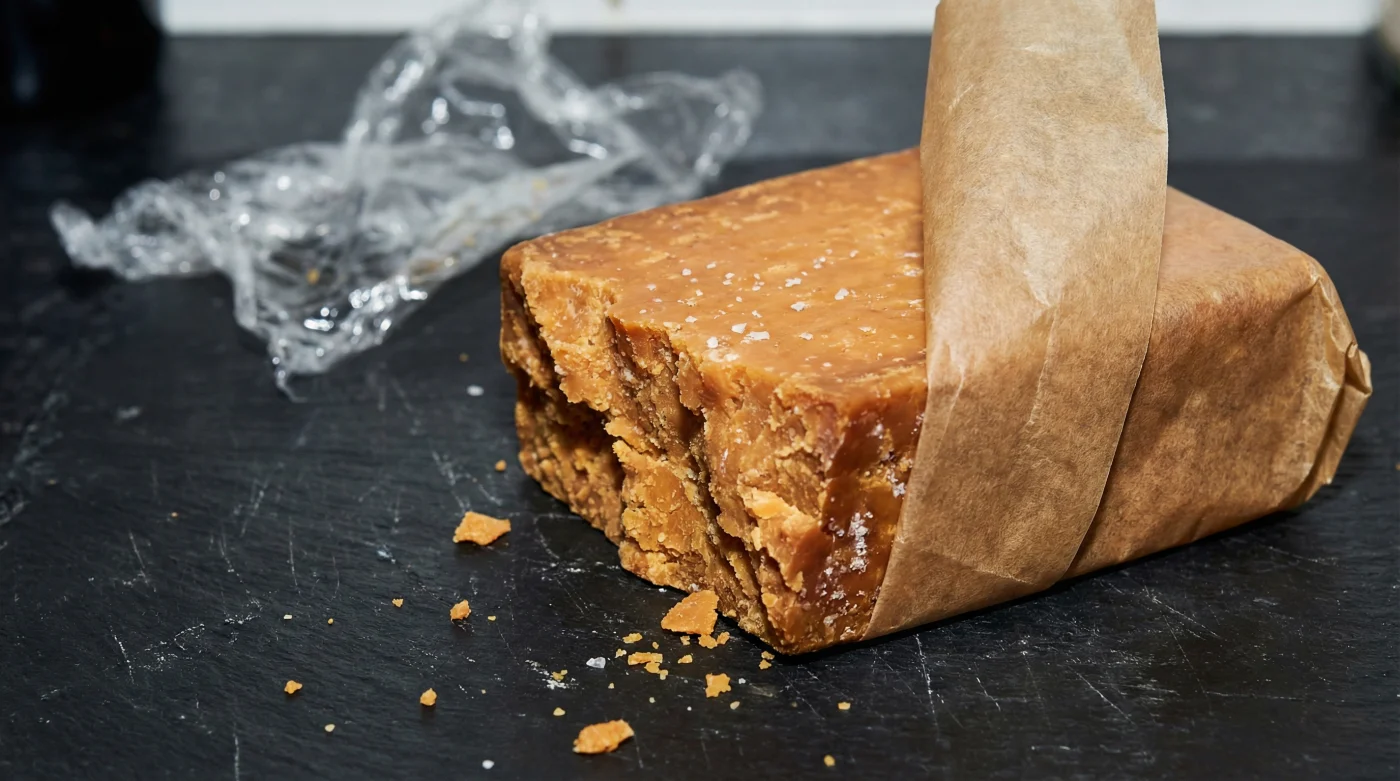
The kitchen is quiet, save for the low, persistent hum of the fridge. It is late on a Tuesday evening, the space is cast in the dull amber glow of the extractor fan light, and you fancy a thick slice of sharp cheddar for a quick toastie. You pull open the heavy door, locate that familiar rectangular block tightly bound in its supermarket plastic, and turn it over. There, blooming stubbornly beneath the cling film, is a powdery white and green patch of mould.
You probably feel a flicker of guilt, assuming you left it too long or failed to seal it correctly. But the truth of the matter is entirely mechanical, rather than a failure of your domestic skills. The very packaging designed to display that cheese safely under harsh shop lights is the exact material slowly suffocating it to death on your middle shelf.
A block of cheddar is not an inert brick of matter, waiting patiently to be consumed. It is a highly active, breathing organism full of living cultures. When it remains trapped in its original, air-tight wrapping, the moisture it naturally expels over time has absolutely nowhere to evaporate. It sits directly on the surface of the dairy, creating a damp, stagnant microclimate that acts as a highly effective greenhouse for unwanted spores.
You might have grown up entirely convinced that tightly sealing food in plastic is the absolute pinnacle of domestic preservation. Yet, breaking this ingrained, modern habit is the single most effective way to respect your groceries and stretch your pound further each week.
The Living Larder: Why Your Cheddar Needs to Breathe
Imagine putting on a heavy plastic raincoat and sitting in a moderately warm room; within an hour, the trapped condensation would leave you feeling entirely damp and uncomfortable. This is exactly the physical reaction happening to your cheese. The perspective shift required here is remarkably simple: stop treating your cheddar like leftover cold pasta, and start treating it with the mindful attention you might give to a delicate houseplant. It needs a regulated, breathable environment.
By forcing your groceries to exist in a vacuum-sealed or tightly cling-filmed state, you are inadvertently accelerating a physical process known as weeping. The internal fats and the moisture begin to separate under the plastic, triggering a greasy, slick film that you often find coating a week-old supermarket block.
Arthur Pendelton, a 62-year-old cheesemonger who runs a damp, gloriously fragrant stone-floored shop in rural Somerset, views this modern habit with deep, vocal frustration. People spend good money on a beautiful, crumbly vintage block, he explains, while carefully scraping a massive wheel of farmhouse cheddar, and the very moment they get it home, they wrap it so tightly it practically gasps. Arthur insists that transferring your purchases immediately from tight plastic into a breathable environment is the sole difference between a block lasting five days or thriving for five weeks.
This advice is not merely artisan snobbery reserved for expensive deli hauls; it applies with equal urgency to a standard, three-pound block of everyday mild cheddar. The delicate chemical compounds that give your sandwich filler its tang and structural integrity degrade rapidly when drowned in their own trapped, acidic whey.
Adapting the Method for Your Kitchen Habits
Not every household consumes their groceries at the exact same pace, and rigid rules rarely survive contact with reality. The true beauty of this organic storage method is how seamlessly it bends to accommodate your highly specific weekly routine.
For the occasional grazer, who only cuts a thin slice for a weekend ploughmans lunch, the primary enemy is the cold, relentless fan of the fridge. You need a setup that allows air circulation to prevent mould, whilst offering a perfectly balanced breathable buffer against premature hardening.
For the busy household cook who might grate half a block on a Sunday for a massive midweek pasta bake, fluctuating moisture is your main hurdle. Frequently handling the block introduces the warmth of your fingers and naturally occurring bacteria from your skin, meaning the remaining portion needs to recover in a stable, dry environment.
For the vintage collector, who invests in highly mature, crystallised blocks that crumble at the mere touch of a knife, preserving the existing texture is paramount. These older, drier cheeses benefit immensely from the temperature stability of the drawer, kept safely away from the fluctuating climate of the fridge door.
The Two-Step Parchment Protocol
- Cheddar cheese longevity doubles when stored outside its original plastic packaging.
- Ultra-processed bread manufacturers face severe backlash over new supermarket labelling rules.
- Tesco meal deal prices trigger customer frustration following this stealth increase.
- Dried pasta water requires significantly more salt than home cooks realise.
- Olive oil goes rancid silently when kept next to the hob.
The process requires nothing more than items you likely already have sitting in your baking cupboard. By dedicating sixty seconds after unpacking your bags to this specific protocol, you completely change the trajectory of the food you have bought.
- Tear off a generous square of standard baking parchment. Do not use greaseproof paper, as it lacks the necessary non-stick silicone coating and will fuse to the fats.
- Remove the cheddar entirely from its original supermarket packaging the moment you are ready to store it. Do not attempt to salvage the sticky plastic flap.
- Wrap the block loosely in the parchment, folding it much like you would wrap a delicate present, but leave the ends folded gently underneath rather than tightly taped shut.
- Place the parchment-wrapped parcel inside an airtight container. A glass tub is highly preferable, as plastic containers can harbour lingering odours from previous meals.
- Store this sealed container in your salad crisper drawer, which is traditionally the warmest and most suitably humid zone of your entire fridge.
By employing this specific, two-layered combination, the paper acts as an active membrane. It absorbs and gently wicks away any excess surface moisture, completely preventing the dampness that mould requires to bloom.
Meanwhile, the solid outer container stops the fridge’s harsh, circulating air from turning your food into a hardened, inedible yellow brick. It effectively creates a perfect little microclimate that mimics the humid, cool caves where these magnificent foods were originally aged.
Reclaiming Your Kitchen Ecosystem
Tending to your daily provisions with this level of specific, mindful care subtly shifts how you interact with your entire kitchen space. It is no longer just a functional room where you rapidly unpack bags, shove things onto shelves, and blindly hope for the best. It becomes a curated environment that you actively and intelligently manage.
When you stop routinely throwing away solid lumps of mouldy cheddar, you are engaging in a quiet, highly satisfying practice. Taking the time to wrap your groceries properly is a quiet act of domestic rebellion against a culture of planned obsolescence and mindless waste.
Throwing away spoiled food might feel like a minor annoyance in the moment, but doing it consistently chips away at your peace of mind and drains your monthly bank balance. Fixing this one small habit creates a ripple effect of competence that spreads to how you handle your vegetables, your bread, and your fresh herbs.
It proves that with just a little applied logic, you do not have to accept the limitations of supermarket packaging. You step into the role of the kitchen scientist, firmly able to dictate how long food lasts and ensuring every single slice tastes exactly as the maker intended.
Cheese is a living, breathing thing; suffocate it in tight plastic, and it will simply give up.
| Storage Method | The Science Behind It | Added Value for You |
|---|---|---|
| Original Cling Film | Traps naturally expelled moisture against the surface, creating a damp greenhouse effect. | Leads to rapid mould growth and forces you to throw away perfectly good food. |
| Baking Parchment & Glass Tub | Wicks away excess wetness whilst protecting from the harsh drying fan of the fridge. | Doubles the lifespan of your block and preserves the intended sharp, crumbly texture. |
| Beeswax Wraps | Provides a breathable, natural barrier but requires regular washing and maintenance. | An excellent, eco-friendly alternative if you are willing to maintain the wraps weekly. |
Frequently Asked Kitchen Questions
Can I just cut the mould off my cheddar? Yes, cheddar is a hard cheese, meaning mould struggles to penetrate deep below the surface. Simply slice off an inch around the affected area, and the rest is perfectly safe to consume.
Does this parchment method work for soft cheeses like Brie? No, soft, bloomy rind cheeses require different humidity levels and are best kept in the waxy paper they are purchased in, loosely placed in the fridge.
Should I store cheese in the fridge door? Never. The door is the warmest part of the fridge and experiences the most drastic temperature fluctuations every time it is opened, which accelerates spoiling.
Is greaseproof paper the same as baking parchment? It is not. Greaseproof paper lacks the silicone coating found on baking parchment, meaning it will eventually stick to the natural fats of the cheese.
Why use a glass tub instead of a plastic one? Glass is non-porous, meaning it will not absorb or transfer the strong smells of your dairy, keeping both your cheese and your fridge smelling completely neutral.