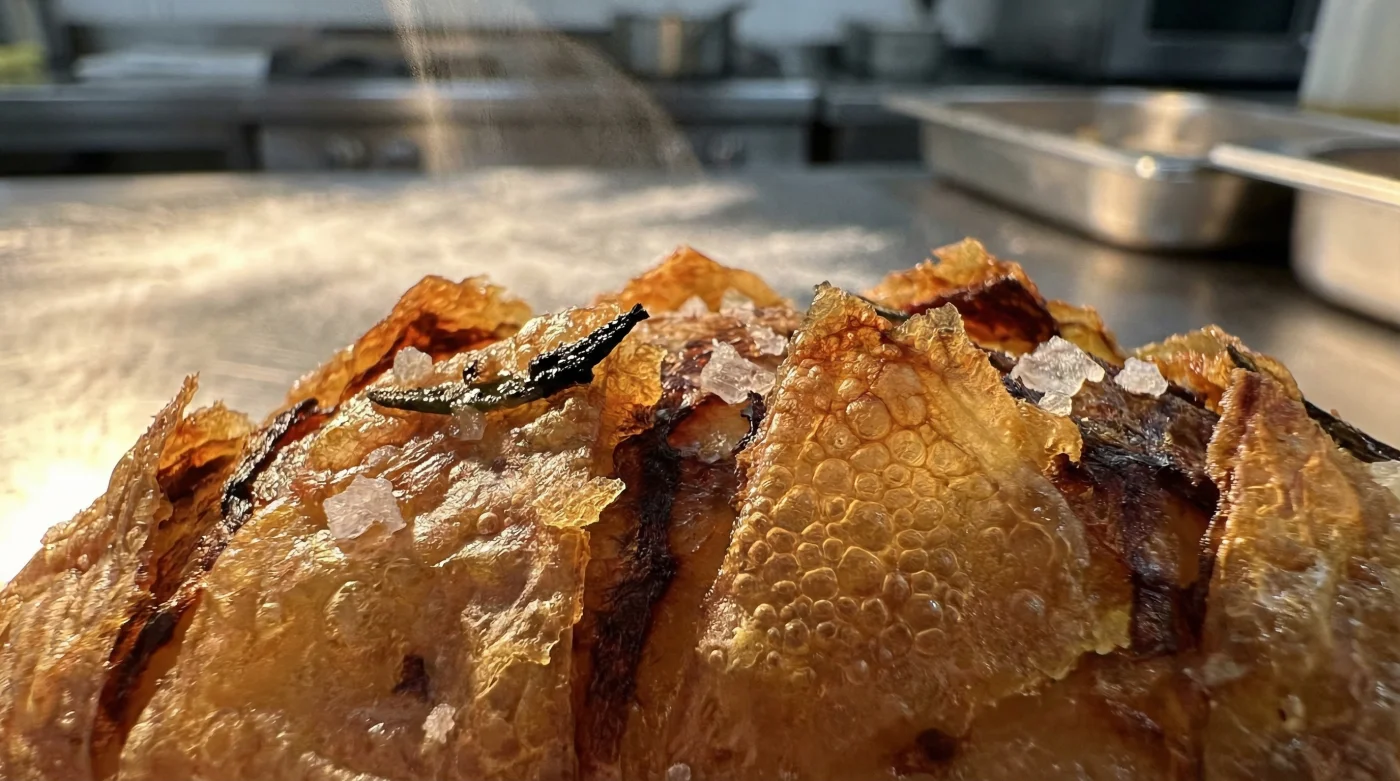
You know the exact sound a proper roast potato should make. It is a sharp, resonant crack, almost like stepping on autumn ice, followed instantly by a cloud of steam and a centre as soft as warm butter. You spend your Sunday mornings chasing this acoustic perfection, peeling endless piles of Maris Pipers and heating jars of expensive goose fat until your kitchen smells like a Victorian chophouse. Yet, when the oven door opens, you are too often met with disappointment.
Instead of golden, glass-like edges, you retrieve a tray of leathery, blonde wedges stubbornly clinging to the tin. They look tired and greasy, reflecting the hours of effort that somehow failed to translate into that professional, shattering bite. You assume the fat was not hot enough, or perhaps the potatoes were simply the wrong crop.
The truth is far simpler, and it lives quietly at the back of your baking cupboard. We have been culturally conditioned to believe that the choice of animal fat is the sole arbitrator of a successful roast. We treat duck and goose fat with a reverence that borders on the superstitious, hoping they will mask any technical flaws in our preparation.
But fat is merely the medium, not the magic. If the surface of your potato is not structurally prepared to fry, even the finest goose fat will simply soak into the flesh, leaving you with a heavy, oil-logged side dish rather than a masterpiece. It is akin to painting a wall without sanding it first; the foundation dictates the finish.
The Chemistry of the Crunch
Think of roasting a potato like rendering the skin on a piece of pork belly. If you just throw it into a hot oven, it tightens and dries. You need to alter the surface. This is where a mundane baking staple steps into the spotlight. By adding just half a teaspoon of bicarbonate of soda to your boiling water, you fundamentally change the potato’s exterior architecture.
Bicarbonate of soda creates an alkaline environment in the water. This alkaline shift causes the outside of the potato to break down dramatically faster than the inside. It creates a starchy paste, a microscopic slurry that coats the potato while the centre remains firm and intact. When this paste hits hot oil, it fries into an intricate, glass-like crust.
It feels almost too simple to be true. You are trading expensive artisan fats for pennies worth of a white powder usually reserved for making a Victoria sponge rise. But this tiny chemical adjustment is the very foundation of restaurant-quality texture, transforming a stubborn root vegetable into something spectacular.
Thomas Alistair, a forty-two-year-old former sous-chef at a Michelin-starred gastropub in Cornwall, spent a decade watching home cooks obsess over roasting temperatures. He recalls weekend shifts where hundreds of kilos of potatoes passed through his section. “They come into the kitchen asking about duck fat brands,” he laughs, “but the real work happens in the saucepan.” He swears by the bicarb, demonstrating how the potatoes should look almost ruined and fluffy on the outside before they ever see the roasting tin.
Adapting the Technique
Not every Sunday roast looks the same, and this method bends beautifully to fit whatever sits on your dining table. The alkaline trick does the heavy lifting, freeing you to choose your fats based on flavour rather than a desperate hope for crispiness. You are no longer chained to meat drippings to get a decent result.
For the Traditionalist, pairing this technique with beef dripping or goose fat remains a spectacular choice. The fat imparts a rich, savoury depth, while the starchy alkaline slurry ensures the crust shatters rather than bends. You get the old-world flavour profile with incredibly sharp, modern precision.
For the Plant-Based Sunday, you no longer need to feel like you are compromising. Olive oil or a robust rapeseed oil will work magnificently. Because the surface of the potato has been chemically altered to crisp, plant oils will fry that outer layer just as effectively, offering a cleaner, slightly grassy finish that cuts through rich vegetarian gravies.
- Cheddar cheese longevity doubles when stored outside its original plastic packaging.
- Ultra-processed bread manufacturers face severe backlash over new supermarket labelling rules.
- Tesco meal deal prices trigger customer frustration following this stealth increase.
- Dried pasta water requires significantly more salt than home cooks realise.
- Olive oil goes rancid silently when kept next to the hob.
The Bicarbonate Ritual
Executing this requires minimal effort, but it does demand a mindful approach to the boiling phase. You are no longer just softening the vegetable; you are actively managing a chemical reaction. Treat the saucepan with the same respect you give the roasting tin.
Fill a large pan with water, add a generous handful of salt, and stir in exactly half a teaspoon of bicarbonate of soda. Wait for the water to reach a furious, rolling boil before carefully dropping in your peeled and quartered potatoes. The alkaline water must act fast.
Let them boil for about twenty to twenty-five minutes. Do not rush this step. They should be completely tender, and the outsides should look ragged, chalky, and slightly mushy. They might look like a mistake, but this is exactly the texture required.
Drain them vigorously. Give the colander a few aggressive shakes. You want the edges battered, creating as much surface area as possible for the hot oil to grab onto. The fluffier the edges, the crispier the final roast.
- Tactical Toolkit: Water Temperature. The water must be at a rolling boil before adding the bicarb to ensure even distribution and immediate reaction.
- Tactical Toolkit: The Fat. Pre-heat your chosen fat in the oven until it shimmers. It must sizzle the second the potatoes are added to seal the starch.
- Tactical Toolkit: The Space. Never crowd the tin. The potatoes need room to breathe and fry; if they touch one another, they will steam and go soggy.
Beyond the Sunday Roast
Mastering this detail brings a surprising amount of peace to your weekend kitchen. The anxiety of timing the perfect roast, of praying to the culinary gods as you carve the meat, simply fades away. You are no longer crossing your fingers.
It is a quiet reminder that the best solutions in the kitchen rarely require expensive ingredients or complicated gadgets. Sometimes, the most profound changes come from looking at a mundane store cupboard staple and understanding exactly what its chemistry can do for you. You are in complete control, relying on science rather than blind hope.
By adopting this simple trick, your roast potatoes stop being a stressful variable. They become a reliable triumph, demanding attention at the table and reminding everyone exactly why they gathered for Sunday lunch in the first place.
“Crispiness is not born in the oven; it is engineered in the boiling water.” – Thomas Alistair
| Key Point | Detail | Added Value for the Reader |
|---|---|---|
| The Bicarb Addition | 1/2 tsp in boiling water alters the pH balance. | Creates a starchy paste that guarantees a shattering crust regardless of the fat used. |
| Aggressive Draining | Shake the colander until edges are highly roughed up. | Maximises surface area for the oil to crisp, completely eliminating leathery edges. |
| Hot Oil Transfer | Fat must be shimmering hot before potatoes go in. | Prevents oil absorption, ensuring a light, digestible potato instead of a greasy one. |
Frequently Asked Questions
Will the bicarbonate of soda leave a soapy taste?
Not at all. Half a teaspoon in a large pot of water is diluted enough to alter the chemistry without leaving any residual flavour on the potato.Can I use baking powder instead?
No. Baking powder contains added acids that counteract the alkaline environment you need to break down the potato’s exterior.What potato variety works best with this method?
Maris Pipers or King Edwards are phenomenal. Their high starch content reacts perfectly with the alkaline water to create the ultimate crust.Do I still need to turn them in the oven?
Yes. Carefully turn them once after they have been roasting for thirty minutes to ensure all sides crisp evenly in the fat.Can I freeze them after boiling?
Absolutely. Once boiled, fluffed, and completely cooled, you can freeze them. Roast directly from frozen, adding an extra fifteen minutes to your oven time.