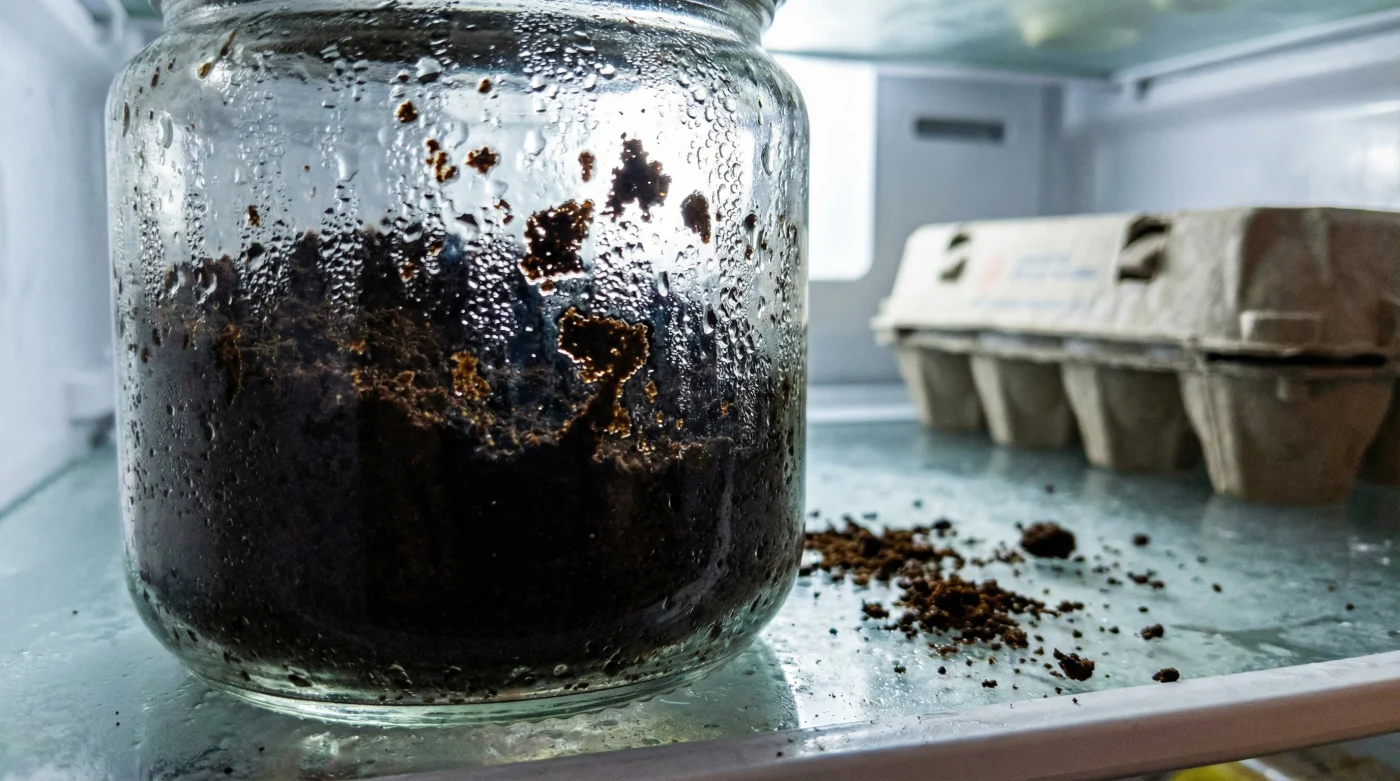
The morning light barely scratches the kitchen window. You press the kettle down, listening for that familiar, rising hum that signals the start of the day. Your hand reaches past the milk cartons and the butter dish, grabbing a securely sealed bag of ground coffee from the back shelf of the fridge. It feels distinctly cold against your skin, reassuringly preserved, as though the mechanical chill of the appliance is holding those rich, dark oils in perfect, suspended animation.
Yet, the reality occurring inside that foil packet is entirely different. By insisting on keeping your morning brew in a cold, damp environment, you are quietly ruining it. The very moment you pop the seal and let the ambient room-temperature air rush in, microscopic water droplets instantly begin to coat the finely milled grounds, initiating a silent destruction of taste.
Think of ground coffee not as a resilient little seed, but as an incredibly thirsty, highly porous sponge. Condensation introduces moisture almost instantly, warping those delicate, painstakingly roasted flavour profiles. Instead of experiencing the bright acidity of an Ethiopian blend or the deep chocolate notes of a Colombian roast, your resulting cup turns inexplicably flat, muddy, and faintly reminiscent of yesterday’s supper.
The Condensation Trap
We are taught from an early age that the kitchen fridge effectively halts time. It stops the milk from souring, keeps the carrots from going limp, and preserves the leftover roast dinner. But applying this preservation logic to roasted coffee ignores the mechanics of thermal shock.
When you move an item from a frigid shelf to a warm kitchen counter, condensation rapidly blooms on the surface. Now imagine that surface isn’t a solid glass milk bottle, but millions of porous, finely crushed particles. Each speck of ground coffee absorbs that sudden moisture like a sponge, triggering a premature extraction process right there inside the packet. By the time the boiling water actually hits the grounds in your cafetière, the most volatile, aromatic compounds have already evaporated into the kitchen air. You are essentially brewing the exhausted leftovers of a chemical reaction.
Gareth Davies, a 42-year-old head roaster in an independent Bristol roastery, watches this heartbreaking mistake happen almost daily. When loyal customers complain that their expensive, single-origin bags lose their magic after just three days at home, he always asks where they keep the packet. “People treat coffee like fresh produce,” Gareth notes, shaking his head as he monitors a cooling drum of newly roasted beans. “But it is actually an extremely dry, hygroscopic staple. Putting it next to your cheddar cheese is like breathing through a damp pillow. It eagerly absorbs all the ambient odours and wetness floating around the appliance.”
Adapting Your Storage Strategy
Fixing this incredibly common culinary disaster requires a slight, deliberate shift in how you organise your cupboards. Your specific approach depends entirely on how you source, prepare, and consume your morning brew.
For the Weekend Purist: If you buy small batch, specialty bags every fortnight from a local café, your worst enemy is oxidation. Keep the grounds tightly packed in their original foil-lined bag, manually squeeze out every last cubic centimetre of air, and clip it firmly shut. Place this bag inside an opaque, airtight ceramic tin on a high pantry shelf, far from fluctuating oven heat.
- Cheddar cheese longevity doubles when stored outside its original plastic packaging.
- Ultra-processed bread manufacturers face severe backlash over new supermarket labelling rules.
- Tesco meal deal prices trigger customer frustration following this stealth increase.
- Dried pasta water requires significantly more salt than home cooks realise.
- Olive oil goes rancid silently when kept next to the hob.
For the Bulk Buyer: Purchasing coffee in massive quantities to save Pounds Sterling makes financial sense, but demands strict portion control. Divide the large bag into smaller, airtight containers as soon as you get home. Avoid clear glass jars entirely, as ambient ultraviolet light sweeping across your kitchen degrades the aromatic surface oils just as aggressively as moisture does.
Mindful Kitchen Application
Transitioning to proper, professional storage is a silent, satisfying act of kitchen maintenance. It takes less than five minutes to physically move your supply out of the cold and into an environment where it can genuinely thrive.
Treat your coffee with the exact same respect you would afford a delicate, highly expensive saffron spice. Setting up your newly organised pantry requires only a few deliberate, preventative steps to guarantee long-term freshness.
- Find a cupboard located at least three feet away from your cooker, kettle, or dishwasher to completely avoid plumes of ambient steam.
- Transfer your daily grounds into a thick, opaque container fitted with a firm silicone or rubber gasket to block out oxygen.
- Never return the grounds to the fridge or freezer once the original factory seal is broken; rapid temperature fluctuations are the enemy.
- Measure your morning dose swiftly with a dry spoon, closing the heavy lid immediately to minimise ongoing air exposure.
Reclaiming the Morning Ritual
Changing a single, somewhat mundane detail about how you store your dry groceries rarely feels like a monumental shift. But rescuing your coffee from the damp, aromatic chill of the fridge offers an immediate, highly tangible reward that you can taste.
It brings a sudden, beautiful clarity to the very first cup of the day. You immediately stop fighting mysterious bitterness and finally start noticing the subtle, roasted warmth that the artisan roaster intended. Protecting that daily morning routine brings a quiet, reliable rhythm to chaotic, rushed mornings, ensuring that your first waking moments are met with genuine warmth rather than a disappointingly compromised flavour.
“Coffee demands nothing more than total darkness, a tight rubber seal, and a cool, dry shelf to give you absolutely everything it has to offer.”
| Storage Method | Scientific Detail | Added Value for You |
|---|---|---|
| The Kitchen Fridge | Rapid temperature shifts create instant condensation on highly porous grounds. | Avoided: Prevents you from enduring muddy, flat, and sour morning brews. |
| Clear Glass Jars | Ultraviolet light slowly but persistently breaks down delicate surface oils. | Avoided: Stops the coffee from tasting inexplicably stale, weak, and papery. |
| Opaque Pantry Tin | Maintains a highly stable, ambient temperature whilst blocking out all light. | Embraced: Delivers a reliably bright, exceptionally fresh, and aromatic cup daily. |
Storage Troubleshooting
Is the kitchen freezer any better than the fridge? Only for long-term storage of completely unopened, factory-sealed bags. Once opened, returning it to the freezer causes the exact same condensation issues as the fridge.
Can I dry out damp coffee grounds in the oven? Sadly not. Once the moisture triggers the initial, invisible extraction process, those complex flavour compounds are permanently lost to the air.
Why do supermarkets sell coffee in foil-lined bags? The thick foil acts as an absolute barrier against light, oxygen, and external moisture, keeping the grounds perfectly stable until the moment you break the seal.
Does a vacuum container actually help preserve the taste? Yes, physically removing excess oxygen drastically slows down the natural staling process, preserving the intended roasted profile for much longer.
How long do grounds actually last in the pantry? For the absolute best taste and aroma, you should aim to consume them within two to three weeks of breaking the protective seal.