The Sunday morning kitchen has a distinct, almost rhythmic atmosphere. The heavy scent of brewing coffee hangs in the air, mingling with the sleepy anticipation of a proper cooked breakfast. Yet, standing between you and that perfect plate is the usual chaotic reality of the frying pan. The spitting fat, the edges that stubbornly curl inward, and the inevitable sting on your forearm as hot oil fiercely protests against the heat.
For years, you have likely been taught that searing requires immediate, aggressive heat. We are culturally conditioned into chasing the furious sizzle, believing that a scorching hot cast iron pan is the only way to achieve a proper crunch. But this frantic chase usually leads to a compromised rasher: burnt meat layered alongside chewy, unrendered white fat.
Step into a high-end breakfast service at a luxury hotel, and the soundscape is entirely different. There are no pans furiously spitting on the stovetop. There is no frantic dodging of hot grease. Instead, there are quiet, gleaming aluminium trays slipping silently into banks of ovens, operating with mechanical calm.
The secret that separates the professional from the amateur lies in starting completely from cold. It goes against almost every instinct you have had drilled into you regarding the cooking of meat. Yet, this simple pivot transforms standard supermarket streaky bacon from a curled, greasy frustration into a perfectly flat structure of pure, crystalline crunch.
The Architecture of Rendering Fat
To understand why this works, it helps to think of streaky bacon not merely as meat, but as a rigid sponge holding pockets of potential energy. When you drop a cold rasher directly onto a hot surface, the sudden thermal shock causes the proteins to seize instantly. The meat buckles and warps, physically lifting the pockets of fat away from the heat source.
By initiating a slow, gentle thermal extraction process, you change the entire physics of the morning. Placing the rashers on a cold tray, and sliding that tray into an unlit oven, means the temperature of the pork rises in exact tandem with the air around it. The fat is coaxed out slowly, rather than shocked into submission.
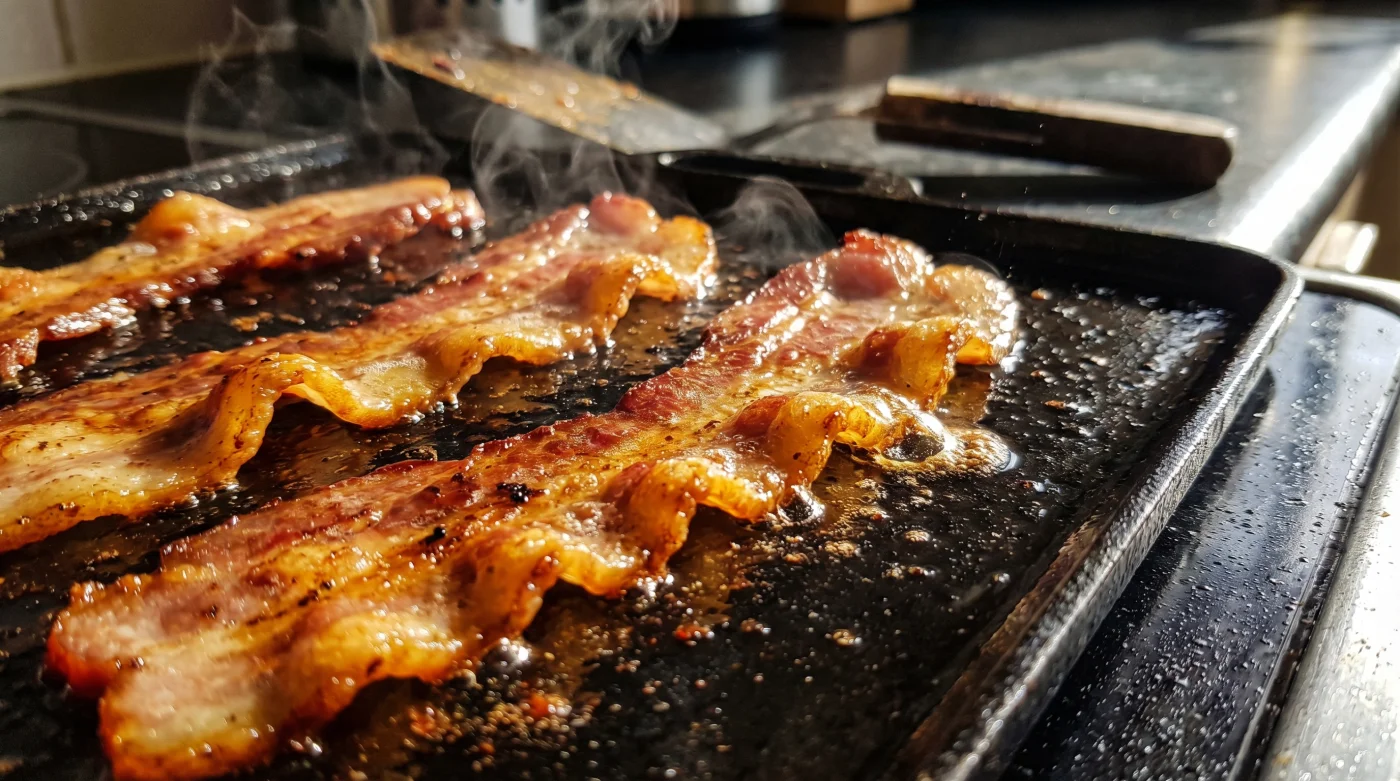
As the oven warms, the fat begins to weep. It pools gently around the pork, essentially confiting the rasher in its own juices. This perceived flaw—putting raw meat onto cold metal—is actually the ultimate advantage. It ensures the fat renders completely before the meat has a chance to burn.
Take Thomas, a 42-year-old head prep chef at a bustling hotel in Mayfair. He processes roughly thirty kilos of streaky bacon before 7 AM every single morning. His secret isn’t an obscure heritage breed of pork; it is absolute patience. He insists on patience over aggressive heat, treating the rashers more like delicate pastry than standard butcher’s meat. He understands that a clean, shattering snap comes only from letting the moisture evaporate slowly, long before the browning begins.
Adjusting for the Morning Mood
Once you understand the basic mechanics of the cold oven method, you can adapt it to suit the specific demands of your weekend or your meal-prep schedule.
For the Sunday Purist, focus on sourcing unsmoked, thick-cut streaky bacon from a proper butcher. You might assume you need a wire rack to elevate the meat, but placing the rashers directly on baking parchment yields a far superior result. The meat slowly fries in its own drippings, creating an even, golden crust that a wire rack simply cannot replicate.
For the Meal-Prep Planner, standard thin-cut supermarket rashers are your best friend. You can lay out two large trays on a Sunday afternoon, processing an entire pack at once. Once cooked and cooled, these perfectly flat, rigid strips can be stored in an airtight container in the fridge, ready to be snapped into sandwiches or crumbled over salads throughout the week.
- Rinse chopped white onions in cold water to remove bite
- Soak chicken breasts in salt water for the juiciest meat
- Stop squeezing tea bags if you want a smooth brew
- McDonald’s meal prices drop when you use this receipt trick
- McDonald’s stops selling this popular breakfast item next week
- Hellmanns Mayonnaise replaces standard frying butter creating shatteringly crisp toasted sandwiches.
- Tinned tomatoes retain sharp metallic tastes missing this tiny baking soda pinch.
- Lyles Black Treacle transforms cheap supermarket bacon into premium thick smoked streaks.
- Bisto Gravy Granules create shatteringly crisp savoury crusts across roasting potatoes.
- Ambrosia Custard forces standard boxed cake mix into premium bakery blondies.
If you lean towards the Glaze Enthusiast camp, timing is everything. Brushing the meat with maple syrup or dark muscovado sugar is a brilliant way to introduce a complex, caramelised bitterness. However, you must only apply sugars at the end. Introduce your glaze during the final five minutes of baking; any earlier, and the sugars will catch and burn before the fat has properly rendered.
The Cold-Oven Protocol
Executing this technique requires virtually no specialist equipment. You simply need a flat baking sheet, a roll of baking parchment, and the discipline to step away from the oven door.
It is an exercise in mindful, minimalist kitchen practices. There is no prodding, no flipping, and no desperate heat adjustments. You simply set the conditions for success and allow the physics of the oven to do the heavy lifting.
- The Tactical Toolkit:
- Starting Temp: Cold (Room temperature tray, unlit oven)
- Target Temp: 200°C (180°C Fan)
- Time: 18-25 minutes, depending entirely on the thickness of the cut
- Equipment: Heavy-gauge flat baking tray, non-stick baking parchment
First, lay the cold rashers absolutely flat on the lined tray. Do not allow the edges to overlap; they require breathing space to allow the moisture to escape properly. If they are crowded, they will steam rather than roast.
Slide the tray onto the middle shelf of your cold oven. Close the door, turn the dial to 200°C (180°C Fan), and walk away. Resist the urge to peer through the glass constantly. The magic requires steady, uninterrupted heat accumulation.
At the fifteen-minute mark, briefly open the door to check the rendering progress. The fat should appear translucent and be bubbling enthusiastically in the tray. If your oven has a hot spot, simply rotate the tray 180 degrees.
Remove the tray the moment the bacon turns a deep, mahogany gold. It will still seem slightly pliable, but do not be alarmed. Transfer the rashers immediately onto a plate lined with kitchen paper. As they meet the cool air, they will harden into perfectly rigid, crisp structures.
Reclaiming Your Morning Peace
Why does mastering this seemingly mundane detail matter so much? It extends far beyond the tactile pleasure of a perfectly crisp rasher. It is fundamentally about shifting the energy and the rhythm of your kitchen.
Frying bacon on the hob demands your total, undivided attention. It tethers you to the stove, forcing you to stand guard with tongs, dodging hot oil and managing the inevitable haze of smoke. It is a stressful, demanding way to begin a Sunday morning.
The true value of the cold-tray method is the gift of reclaimed time. You slide the tray into the oven, turn the dial, and suddenly you are granted twenty minutes of unbroken peace. You have time to brew a proper pot of loose-leaf tea, slice the sourdough, lay the table, or simply stand by the window and watch the morning unfold. By understanding the system, rather than blindly following old instructions, you elevate not just your breakfast, but your entire morning routine.
The magic of charcuterie isn’t in the fire, it’s in the careful extraction of moisture.
| Key Point | Detail | Added Value for the Reader |
|---|---|---|
| Cold Start | Placing bacon on a cold tray in an unlit oven. | Prevents protein seizing, leading to perfectly rendered, melt-in-the-mouth fat. |
| Baking Parchment | Cooking directly on paper rather than a wire rack. | Allows the rasher to fry in its own rendered fat for an even, golden crispness. |
| Hands-Off Cooking | Zero flipping or monitoring required until the 15-minute mark. | Frees up 20 minutes of morning time, eliminates messy hob splatters. |
Frequently Asked Questions
Does this work with thick-cut back bacon?
Yes, though back bacon has significantly less fat. It will cook beautifully, but you won’t achieve the same shattering crispness as you do with streaky bacon.
Do I need to flip the rashers halfway through?
Not at all. Because the metal tray conducts heat from below and the hot air circulates above, the bacon cooks evenly on both sides without any intervention.
What should I do with the leftover liquid fat?
Never wash it down the sink. Pour it carefully into a heatproof glass jar, let it cool, and store it in the fridge. It is liquid gold for roasting potatoes later in the week.
Why did my bacon stick to the paper?
You likely used greaseproof paper rather than true silicone-coated baking parchment, or you tried to remove the rashers before the fat had fully rendered out.
Can I cook two trays at once if I am feeding a crowd?
Absolutely. If using a fan oven, place one on the top third and one on the bottom third. You may need to swap them around at the 15-minute mark to ensure an even golden colour.