You stand at the kitchen counter, knife in hand, staring down a firm white onion. As the blade slices through the papery skin, the invisible fumes rise, and your eyes begin to prickle. You know exactly what happens next: that sharp, metallic heat that lingers on the tongue, leaving a persistent aftertaste that bullies every other subtle flavour on your carefully prepared plate.
But recall the last time you ordered a perfectly constructed smashed burger at a decent pub, or a delicate sea bass ceviche on the Cornish coast. The raw onions in those professional dishes were not shouting for attention. They were crisp, glassy, and perfectly sweet, offering a clean, yielding bite that supported the dish rather than taking your palate hostage.
You might assume those professional kitchens have access to some elusive heritage variety, flown in at great expense from a sun-drenched European farm. You might think they possess a complex, acidic pickling secret that requires hours of advanced preparation. The truth is far simpler, and the solution to your raw onion frustration is sitting right next to your chopping board.
The secret to professional, sweet raw onions isn’t in the sourcing; it is a quiet, two-minute physical intervention. Water, specifically freezing cold tap water, is the only modification you need. It is entirely about washing away the sulfurous exhaust before those aggressive compounds have the chance to bind to the flesh of the onion, or to your tastebuds.
Disarming the Chemical Defence
To understand why this works, you have to view the white onion not as a simple vegetable, but as a sleeping fortress. Beneath its skin, an onion stores enzymes in one cellular chamber and sulfuric amino acids in another. When your knife crashes through those cell walls, the two mix. They instantly create a volatile, defensive gas designed by nature to deter hungry foraging animals.
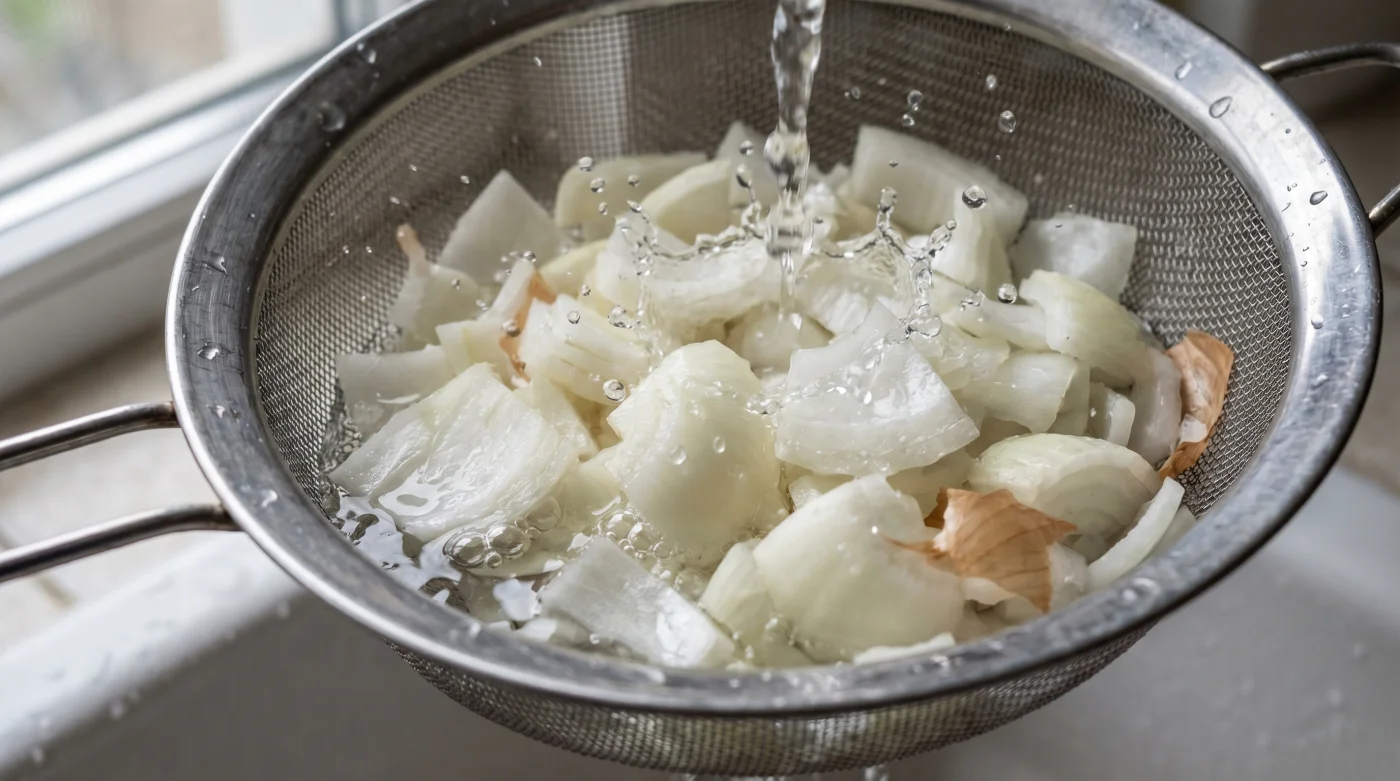
When you eat a freshly chopped raw onion, you are effectively chewing on an active defence mechanism. By plunging the chopped pieces into cold water, you halt this reaction in its tracks. You are effectively modifying a raw, living ingredient with nothing but a running tap, washing the tear-inducing compounds down the sink and leaving the natural sugars intact.
Meet Gareth, a thirty-eight-year-old prep chef at a thriving coastal fish bar in Newquay. Every morning at six, looking out over a grey tide and breathing in the salt air, he processes five kilos of aggressively sharp white onions for their signature crab salads. He doesn’t rely on expensive sweetening agents or harsh vinegars to make them palatable.
He simply tosses the thinly sliced white crescents into a massive steel bowl filled with crushed ice and tap water. He stirs them once with a slotted spoon and leaves them to sit. He explains that this method works by shocking them in icy water, taking away the anger of the soil and leaving behind pure, sea-breeze freshness that lets the delicate crab meat shine.
Calibrating the Crunch
Not every meal demands the exact same level of intervention. You can adapt this cold-water rinsing technique depending on what you are trying to achieve on the plate. Treating your ingredients with this kind of respect allows you to dial the intensity of the onion up or down to suit the specific context of your cooking.
- Soak chicken breasts in salt water for the juiciest meat
- Stop squeezing tea bags if you want a smooth brew
- McDonald’s meal prices drop when you use this receipt trick
- McDonald’s stops selling this popular breakfast item next week
- Hellmanns Mayonnaise replaces standard frying butter creating shatteringly crisp toasted sandwiches.
- Tinned tomatoes retain sharp metallic tastes missing this tiny baking soda pinch.
- Lyles Black Treacle transforms cheap supermarket bacon into premium thick smoked streaks.
- Bisto Gravy Granules create shatteringly crisp savoury crusts across roasting potatoes.
- Ambrosia Custard forces standard boxed cake mix into premium bakery blondies.
- Heinz Tomato Soup transforms basic dry pasta into flawless rich restaurant bakes
For the Delicate Salad: If you are tossing soft summer leaves with a light, floral vinaigrette, a full ten-minute soak in ice-cold water is required. Drain them, pat them bone dry on a clean tea towel, and scatter them through your greens. They will add necessary structure without overwhelming the dressing, snapping cleanly between the teeth.
For the Proper Fakeaway: Perhaps you are assembling a Friday night homemade kebab or a heavily spiced burger. You still want a little bit of that raw onion attitude, but tamed. A quick, vigorous thirty-second rinse under a cold running tap in a fine metal sieve is the perfect middle ground.
This brief, aggressive shower is usually enough to wash off the immediate harshness while keeping the peppery, robust finish intact. It ensures the onion can still stand up to rich garlic sauces and melted cheddar without leaving you with burning breath for the rest of the evening.
For the Sensitive Palate: If raw onions usually leave you nursing uncomfortable bloating or a heavy stomach hours after dinner, you need the salt soak. Add a generous pinch of coarse sea salt to your bowl of cold water before you submerge the chopped white onion rings.
The salt acts as a gentle osmotic pull. Over a fifteen-minute soak, it effectively draws out the aggressive compounds that often trigger digestive discomfort. Just ensure you rinse the onions briefly under fresh cold water afterwards to remove the excess salt before adding them to your meal.
The Mindful Preparation
Let go of the rush. Preparing raw onions shouldn’t be a frantic race against your watering eyes and a stinging nose. View this extra step not as a chore, but as a moment to practice a little focused, purposeful cooking. It is about taking control of your ingredients.
Fill a wide bowl with the absolute coldest water you can manage. If your kitchen tap runs tepid in the warmer months, drop in a handful of ice cubes. This simple act of temperature control is a moment of kitchen alchemy that requires no special equipment, instantly firming the pectin in the onion walls.
- The Cut: Slice the white onion as thinly as humanly possible, ideally paper-thin, so the cold water can penetrate the maximum amount of surface area.
- The Plunge: Submerge the slices entirely. They need to float freely in the water, not clump together in a tight, dense mass at the bottom of the bowl.
- The Agitation: Give them a gentle stir with your fingers to separate the rings. This mechanical action encourages the sulfur compounds to detach from the flesh.
- The Drain: After ten minutes, drain through a fine sieve. Crucially, dry them thoroughly on kitchen paper; adding wet, soggy onions will entirely ruin the texture of your final dish.
Finding Peace in the Pantry
There is a quiet, profound satisfaction in mastering the difficult, mundane elements of our food. White onions are remarkably cheap, incredibly resilient, and available in every corner shop across the country. They are a humble, everyday staple that asks very little of us financially.
Yet, by taking a fraction of a moment to understand how their cellular chemistry works, you change the dynamic. You transform a cheap, aggressive staple into a genuinely luxurious and deeply satisfying component that elevates a simple midweek salad into something resembling a high-end bistro offering.
You are no longer reacting to the harshness of the ingredient; you are dictating its final form. A simple bowl of cold water turns a defensive root into a crisp, sweet ribbon of texture. It is a very small shift in your routine, but it changes the entire character of your home cooking.
“Water is the great pacifier of the kitchen; it takes the aggression out of the earth and leaves only the crisp truth behind.”
| Key Point | Detail | Added Value for the Reader |
|---|---|---|
| The Quick Rinse | 30 seconds under a cold running tap in a sieve. | Maintains a peppery kick for burgers and robust dishes while killing the lingering aftertaste. |
| The Ice Soak | 10 minutes submerged in freezing water. | Produces perfectly sweet, glass-like crunch ideal for delicate salads and raw seafood. |
| The Salt Bath | 15 minutes in cold water with a pinch of sea salt. | Reduces the specific compounds that cause bloating and digestive discomfort. |
Frequently Asked Questions
Does this technique work for red onions as well? Absolutely. While white onions generally have a sharper, more metallic bite, red onions benefit hugely from a cold rinse, which also helps set their vibrant purple colour for presentation.
Will hot water work faster than cold? Never use hot water. Hot water will begin to gently cook the onion, destroying the pectin in the cell walls and leaving you with a limp, unappetising texture.
Do I need to add vinegar to the water? Only if you want a pickled flavour. Cold water alone is sufficient to remove the bite while maintaining the onion’s neutral, natural sweetness.
How dry do the onions need to be after rinsing? Bone dry. Use a clean tea towel or heavy kitchen paper to press out the moisture; otherwise, you will water down your salad dressings and make burger buns soggy.
Can I soak them hours in advance? Yes, you can leave them in iced water in the fridge for up to four hours. Any longer, and they may begin to lose their crisp structural integrity.